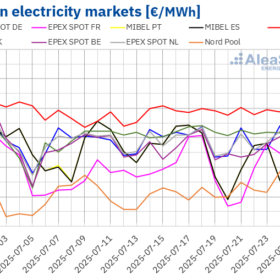
European electricity prices fall despite drop in solar energy production
Weekly average electricity prices fell last week in France, Italy, Portugal and Spain, even as solar energy output also declined, according to AleaSoft Energy Forecasting.

Australia expands 2030 renewable target by 18 GW after COP28 pledge
Australia is one of only seven countries outside the European Union that has updated its 2030 national renewable target with an 18 GW boost, since the 2023 COP28 global tripling pledge.

New utility software to steer homeowner energy systems, enable load trading
Austrian startup Podero has launched software to enable utilities to roll out new residential services via its home energy device steering and trading solutions.

NHPC accepting bids to build 1.2 GW of solar in India
NHPC Ltd, on behalf of Bundelkhand Saur Urja Ltd (BSUL), has launched a tender to select developers to build 1.2 GW of solar power plants (four × 300 MW) in northern India.
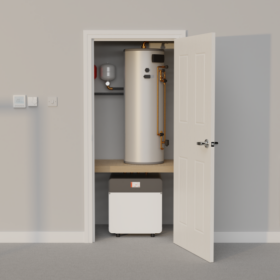
Smart Pension invests GBP 330 million in Octopus Energy clean-tech funds
UK workplace pension provider Smart Pension has announced an initial GBP 330 million ($440 million) strategic investment in Octopus Energy Generation. The renewables arm of Octopus Energy invests in solar, wind and energy storage projects, as well as clean energy technologies such as heat pumps.
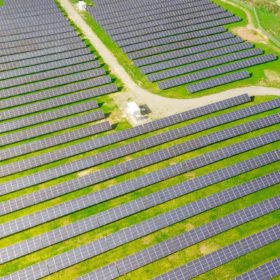
Global electricity demand to rise in 2026 as renewables lead, says IEA
Global electricity demand is set to rise more than 3% per year through 2026, driven by growth in Asia and greater use across industry, data centers, and transport, with renewables, gas, and nuclear meeting most of the increase, says the International Energy Agency (IEA).
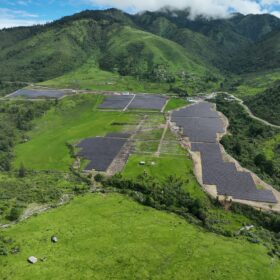
Bhutan commissions first utility-scale solar plant
The Sephu solar project currently has a capacity of 17.38 MW following completion of phase one of project works. Another 5 MW is expected to come online later this year.
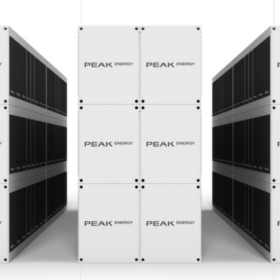
Peak Energy launches first US grid-scale sodium-ion storage system
Peak Energy’s passively cooled sodium-ion system, part of a shared pilot with utilities and independent power producers (IPPs), targets a 20% lifetime cost drop and a 33% cut in degradation over 20 years.
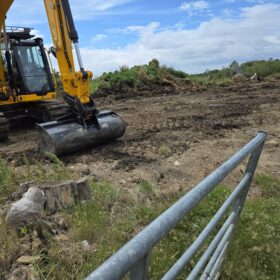
Big Solar Co-op raises over GBP 1 million for UK coal mine project
Solar bond offered through impact investing platform provides community energy cooperative with funds to construct 3.5 MW project in Whiteborough, England. Big Solar Co-op plans to use European manufactured and second-life panels. The co-op expects to commission the project before the end of 2025.

A better understanding of UV degradation
Performance loss from ultraviolet (UV) light has become a concern for new PV cells, though earlier lab tests may have overstated the issue. Paul Gebhardt, photovoltaic module reliability scientist at Fraunhofer Institute for Solar Energy Systems (ISE), outlines a mechanism that may have distorted earlier results.
