
German company scores $9m solar pump order in Bangladesh
Raach Solar and its Power Utility Bangladesh Ltd local partner have landed two contracts to supply more than 700 pumps in the north-western Bogra district, with the Asian Development Bank footing the bill.
New algorithm to identify faults in PV systems
A new algorithm identifies five kinds of faults in PV systems, while also detecting when faults have been resolved to prevent false detections. It is based on the least significant difference test, which is a set of individual t-tests comparing the means of two or more pre-determined groups.
Climate change to reduce solar radiation in hot, arid regions
A new Princeton University study shows that PV plants in hot, arid parts of the world, such as the Middle East and the U.S. Southwest, will be particularly affected by climate change.

Lithium-ion gigafactory breaks ground in Australia
Less than a year from now, Australia will start producing its own renewables-storing lithium-ion batteries in New South Wales.
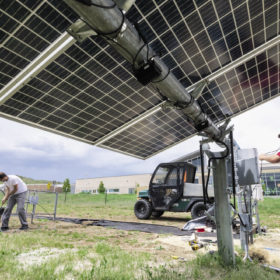
Trump pulls tariff exemption for bifacial panels – again
The U.S. president issued a proclamation on Oct. 10 that cites the impact of imported bifacial panels on U.S. solar manufacturing, while also raising the scheduled fourth-year tariff rate from 15% to 18%.
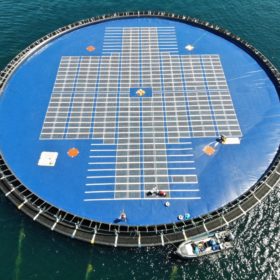
Norwegian floating PV specialist Ocean Sun plans IPO
The company aims to raise NOK100 million by going public. It will use the funds to expand its overseas operation and reinforce engineering resources in Norway.

Scania develops solar cell-clad trailer
The 18-meter long solar cell-clad trailer is said to enable fuel savings of 5-10% in Sweden. Swedish thin-film manufacturer Midsummer is a partner on the project.
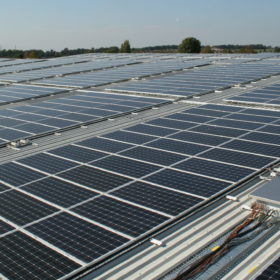
Indian businesses can assess energy transition readiness with new tool
The Portal for Renewable Energy Action Assessment Metrics is an online rating system which enables businesses to assess their renewable energy consumption.
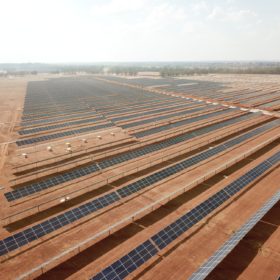
Fotowatio secures financing for 90 MW solar plant in grid-challenged southeastern Australia
Sustainable intentions come together in the signing of a green loan to fund ongoing development of FRV’s Sebastopol Solar Farm, which lender ING says contributes towards its ‘ambition to align our lending portfolio with the Paris Agreement goals.’
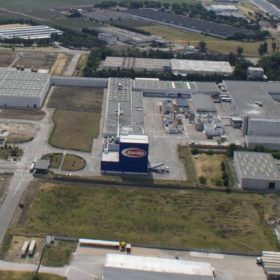
Solar tower for world’s largest pasta producer
The German Aerospace Center is working with partners in Italy to supply Italian pasta maker Barilla with electricity and heat from renewable sources.
