
Underground hydrogen storage in Canada
A new study has assessed the geological feasibility of large-scale seasonal underground hydrogen storage in Canada and has found that the Western Canada Sedimentary Basin and southern Ontario are the most suitable areas for the technology.
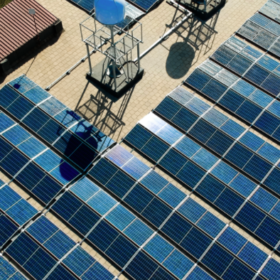
South African telecommunications group wants to deploy 175 MW of PV in Africa
Econet wants to build commercial and industrial PV systems across its homeland, Kenya, Zambia and the Democratic Republic of Congo. South Africa-based investment firm Royal Bafokeng Holdings (RBH) has made a $20 million equity investment in these projects.

Prospects for bifacial and large-format products
The pandemic and accidents at polysilicon labs in China’s Xinjiang region put PV manufacturers under pressure to maintain production this year, while slowing cell and module R&D. After half-cut and multi-busbar becomes commonplace, manufacturers will continue to explore the high-density assembly methods that emerged last year, as well as n-type cells. But the market is also shifting to large formats, and the share of bifacial products is growing this year. As sizing up modules can bring immediate returns, PV InfoLink’s Amy Fang expects the PV industry to prioritize the development of large formats and bifacial products next year.
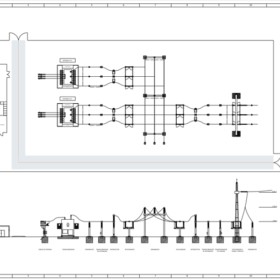
New algorithm to connect solar parks to substations
Spanish PV software specialist RatedPower has developed a new algorithm that purportedly offers a way to efficiently design grid interconnections.
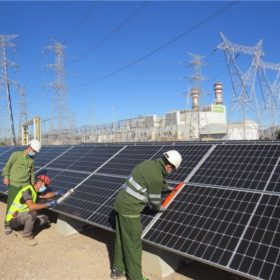
Iberdrola adding PV to combined-cycle power plants
Energy giant Iberdrola plans to install 32.5 MW of solar at its combined-cycle power plants in Spain.
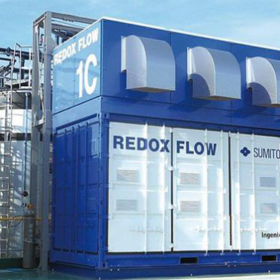
TNG sets up vanadium redox flow battery business
TNG Ltd. has set up a new subsidiary, TNG Energy, to advance its green ambitions by making vanadium redox flow batteries for off-grid solutions.
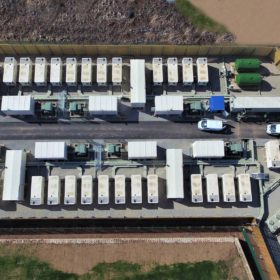
The UK’s biggest balancing act
The nation’s electricity system operator said it wanted more energy storage facilities and to procure new stability products following a big power outage last year. Some 12 months on, the country’s biggest battery storage company has rolled up its sleeves to take on a new role.
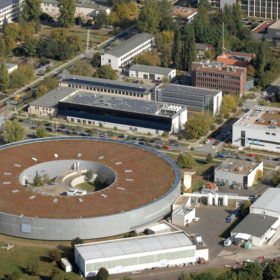
Shedding light on amorphous silicon
Scientists in Europe took a very close look at the thin amorphous silicon layers used in heterojunction and tandem solar cells, building a full picture of the material’s structure at the nanoscale. Their findings could help scientists solve the long-standing mystery of light induced degradation.

Tokyo Gas issues green bond to fund acquisition of 694 MW of PV
The Japanese gas provider wants to acquire a 63.2 MW solar plant in Japan and a 631 MW PV facility in the United States. It has issued a JPY 10 billion ($95.9 million) green bond to finance these transactions and support its other operations.

World Bank allocates $50m credit for commercial solar panels in Brazil
The finance is being made available through Santander Brasil as part of an $8 billion global response to Covid-19.
