Belgian school selling solar power to neighbors
Belgium is testing its first energy community by giving special status to a solar energy pilot near Brussels. The project will help to create a large-scale legal framework to apply the European Directives to energy communities.

Covid-19 weekly round-up: Solar Solutions show off again but CEOs voice confidence and Spain is moving its green economic recovery up a gear
Plus, solar funding is down and Australian rooftop installers are preparing for tough times ahead as one U.S. utility has warned customers to be alert to scammers hoping to benefit from the pandemic.

Yingli warns shareholders they could be wiped out
The court responsible for appointing an administrator to restructure the debt-laden Chinese business has rolled all six units into one administration, according to an SEC filing made today.
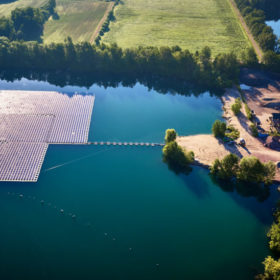
German floating PV plant works better than expected
The volume of solar electricity generated and proportion of self-consumption at the Lake Maiwald floating plant have both surpassed expectations. Gravel company Ossola has been able to reduce its electricity bill 10% as a result.

Aerosols affect photovoltaic generation in Europe
The German meteorological service, the Karlsruhe Institute of Technology and solar forecaster Meteocontrol are investigating how weather events can be better factored in when forecasting solar power generation. The Federal Ministry of Economics is funding the ‘Permastrom’ research project with €2.5 million.

Solar Solutions International trade show is off – again
Touted as ‘the largest solar trade show in Europe’ just two weeks ago, this year’s event has been canned after exhibitors voiced concerns. Next year’s conference will take place in Haarlem, in the Netherlands, from March 16-18.

Rooftop solar window based on semi-transparent perovskite solar cells
A prototype of an energy-harvesting, solar-powered smart window device has been developed by scientists from the U.S. Department of Energy’s Argonne National Laboratory. The window was created by integrating a semi-transparent perovskite solar cell and a multi-layer nanophotonic coating.
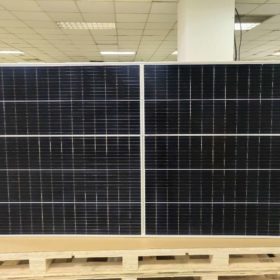
New alliance aims to break 600 W threshold
Chinese manufacturers including Trina Solar, Risen Energy and JA Solar have established a group to design and produce bigger PV modules. The 39-member alliance also includes inverter suppliers including Huawei, Sungrow and SMA.

Israel’s solar-plus-storage tender concludes with final price of $0.0578/kWh
The government assigned 168 MW of capacity through the tender and selected three developers for 11 projects, with capacities of 100 MW, 48 MW and 20 MW.
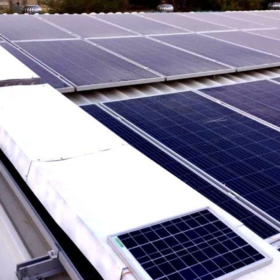
Water-free module cleaner for residential PV systems
A newly developed autonomous robotic cleaning solution for modules uses artificial intelligence to clean daily or on demand, without substantial human input.
