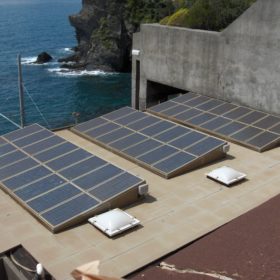
Why go solar? We can think of at least 333 reasons
Australian researchers have compiled data from 173 studies which examined homeowner behavior when buying rooftop PV and identified 333 predictors related to the attitude, knowledge, tendency, awareness, willingness and intent of householders.
Code-based modeling for PV of the future
A British-Nigerian team of researchers claims to have developed a code-based approach for solar modeling and simulation which could facilitate better decisions in PV tech research. The model can reportedly be applied to the study of solar thermodynamics, cell material characteristics, PV system design and power monitoring potential.
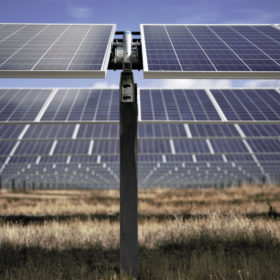
Wireless sensing for remote operation of off-grid tracker solar
Researchers in Thailand are proposing a wireless monitoring solution for PV in remote locations. The system, based on global standard ZigBee 2.4 GHz wireless technology, can read data and tilt solar panels in auto and manual modes.

Slovakia launches first renewables auction
The ceiling price for solar and wind power has been set at €84.98/MWh. It is expected around 30 MW of generation capacity will be allocated and solar projects ranging in size from 100 kW to 2 MW will be entitled to participate.
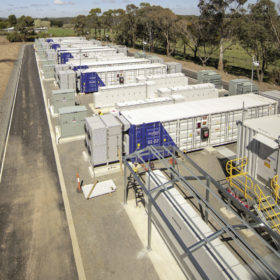
Global energy storage market to surge to 15 GW by 2024
As the sector continues to grow rapidly, delays in manufacturing scale-ups, difficulties sourcing raw materials and a separate path taken by the electric vehicle sector could all chuck ‘sand in the gears’, according to analyst Wood Mackenzie.
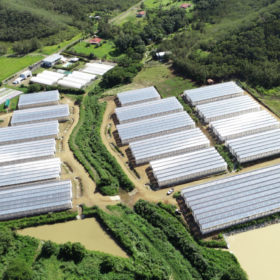
Agrivoltaics in New Caledonia
The 16-greenhouse Focola project has been developed by French renewables developer Akuo and local utility company Enercal Energies Nouvelles on the Pacific Ocean territory.

A new residential inverter with battery interface from Growatt
The inverters of the TL-XH series have efficiencies ranging from 98.2% to 98.4%. The 10.8 kg devices are compatible with double-glass modules and higher yields, the manufacturer claims.

How FIT cuts killed plans for UK solar manufacturing hub
With the European Commission claiming its €100 billion ‘Just Transition’ fund will ease EU coal mining regions into a post-fossil-fuel future energy system, Adam Smith considers what happened in one deprived area of Britain when government policy failed to support talk of clean energy ambitions.
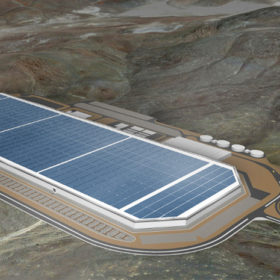
‘Tesla and Panasonic are scrapping their partnership’ in solar cell production at Buffalo factory
Elon Musk has spoken of an ‘exponential’ ramp-up of its solar glass tile at the facility in New York state. Panasonic’s tiles never made the cut.
Self-healing polymeric coating for organic PV
A new polymer developed by Indian researchers can mend its own cracks when exposed to ultraviolet light. The unique ability makes it an ideal candidate as a smart coating for photovoltaic solar devices to prevent damages and increase performances.
