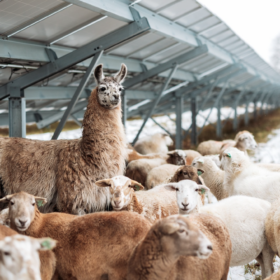
‘Farm of tomorrow’ pushes agrivoltaics beyond crop yields
Norbut Solar Farms shifted from traditional US real estate development toward long-term land stewardship, generating renewable energy alongside crops and livestock.
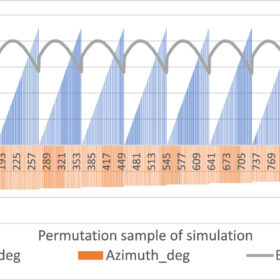
The optimal fixed tilt, azimuth angles for bifacial PV in Saudi Arabia
A new bifacial PV optimization model for 18 Saudi Arabian cities identifies optimal tilt and azimuth, showing rear-side irradiance can boost annual energy yield by 8–12 % and shifts tilt 3°–11° higher than monofacial modules. The framework validates previous studies, highlights high- and low-performing locations, and serves as an early-stage planning tool before detailed project simulations.

BNEF report shows drop-off in support for standalone PV in Australia
Investment in utility-scale solar in Australia dropped 35% in the second half of 2025 compared to the previous six months with BloombergNEF (BNEF) saying the growth of rooftop solar and a booming battery market are among the reasons for the precipitous decline.

NREL researchers quantify UV-induced degradation levels in TOPCon solar cells
Researchers at NREL found that UV exposure can cause significant, partly non-recoverable degradation in TOPCon solar cells, with strong cell-to-cell and intra-cell variability linked to passivation and processing inconsistencies. While some UV-related losses recover quickly under light and are unlikely to affect field performance, the findings highlight gaps in current qualification tests and the need for improved UV aging standards.

Enphase Energy cuts about 6% of workforce
Enphase Energy said it is cutting around 6% of its global workforce, affecting about 160 employees, as the company prepares for lower near-term demand following the expiration of the United States federal residential solar tax credit and moves to reduce costs through restructuring and automation.

Spain deploys 1.13 GW of solar for self-consumption in 2025
Spain installed 1.14 GW of solar capacity for self-consumption in 2025, lifting cumulative capacity to 9.3 GW, as residential and commercial installations declined while industrial and off-grid segments showed greater resilience, according to data from the Spanish Photovoltaic Union.

Key takeaways from Solar Flex Prague
Czechia’s first international conference on solar and flexibility highlighted that the combination of solar with storage and flexibility sources is key to not just Czechia’s, but also Europe’s, secure and competitive electricity system.

Data center survey reveals majority believe renewables and BESS are the ideal energy mix, power issues start in 2027
54% of respondents cited “energy availability and redundancy” as the single greatest obstacle to successful data center development between now and 2030.

Brazil curtails 20% of solar and wind output in 2025, with losses at $1.2 billion
Brazil curtailed about one-fifth of its solar and wind generation in 2025, wasting an estimated BRL 6.5 billion ($1.23 billion), as grid constraints and demand mismatches pushed the power system close to operational safety limits on 16 days, according to a report from Volt Robotics.
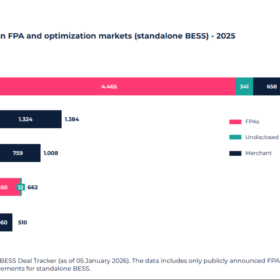
Europe contracts nearly 24 GWh of BESS under flexibility purchase agreements in 2025
With conventional renewable PPA momentum slowing, Europe’s flexibility market soared in 2025, driven by a surge in fixed-offtake agreements and BESS optimization structures. At the same time, co-located storage gained unprecedented traction, signaling a shift toward more integrated and flexible energy solutions.
