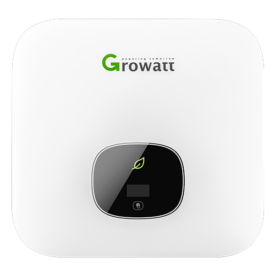
A new residential inverter with battery interface from Growatt
The inverters of the TL-XH series have efficiencies ranging from 98.2% to 98.4%. The 10.8 kg devices are compatible with double-glass modules and higher yields, the manufacturer claims.

How FIT cuts killed plans for UK solar manufacturing hub
With the European Commission claiming its €100 billion ‘Just Transition’ fund will ease EU coal mining regions into a post-fossil-fuel future energy system, Adam Smith considers what happened in one deprived area of Britain when government policy failed to support talk of clean energy ambitions.
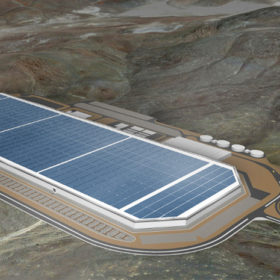
‘Tesla and Panasonic are scrapping their partnership’ in solar cell production at Buffalo factory
Elon Musk has spoken of an ‘exponential’ ramp-up of its solar glass tile at the facility in New York state. Panasonic’s tiles never made the cut.
Self-healing polymeric coating for organic PV
A new polymer developed by Indian researchers can mend its own cracks when exposed to ultraviolet light. The unique ability makes it an ideal candidate as a smart coating for photovoltaic solar devices to prevent damages and increase performances.

Recycling lead-acid batteries for perovskite solar cell manufacturing
Researchers from China are proposing to use spent battery lead for creating a perovskite that can be used in the production of solar cells that are based on this promising material. The proposed one-step process, which was tested in the production of a 17.38% efficient perovskite heterojunction cell, is said to be cheaper and less energy-intensive than other recycling processes for waste lead from lead-acid batteries.
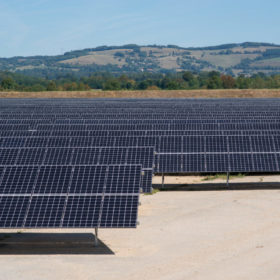
Voltalia acquires Greensolver
By acquiring the specialist in plant management services, Voltalia aims to consolidate its position as an integrated player in renewable energies across the entire value chain.
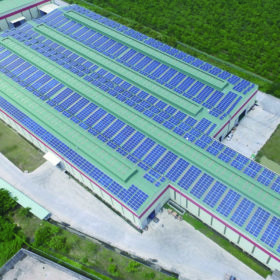
Taiwan to add 2.2 GW of new solar this year
According to GlobalData, the country saw deployment of 1.6 GW of new PV installations last year, with cumulative capacity reaching 4.3 GW. Overall, around 20 GW of PV power should be installed on the island by 2026.
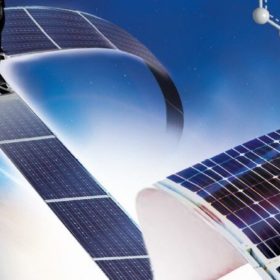
What’s cooking in Eni’s PV lab?
Researchers at the Italian oil group are trying to improve organic photovoltaics and luminescent solar concentrators and a new supercomputer with sophisticated algorithms will help them with the solar energy puzzle.
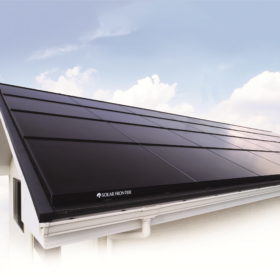
France gives boost to rooftop solar with wider tariff access
Eligibility for fixed tariffs for excess energy fed into the grid – and exemption from the tendering process – has been widened from systems with a maximum generation capacity of 100 kW to 300 kW.
How do solar cells work underwater?
Although cells lose much of their power yield when submerged, they may not be useless. Researchers in India say submerged cells could be used in monitoring sensors and for other commercial and defense applications. An amorphous silicon cell from Panasonic was tested in their study.
