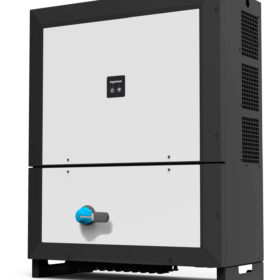
Ingeteam unveils new 1500 V string inverter
The Spanish manufacturer said the new three-phase device may reach a power output of 160 kWac in a single 75kg unit. The inverter features 1500 Vdc technology and is said to be able to reach a power output of 161 kW (AC) in a single 75kg unit.
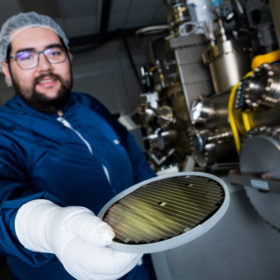
Germanium use reduced in GaAs solar cells by new two-step process
Researchers from Canada have unveiled a new germanium deposition process which is said to eliminate threading dislocations and be significantly cheaper than previous approaches. The scientists say their technique creates nanovoids on the surface of the germanium layer which can attract and annihilate undesirable dislocations.

Huawei facing another three Solaredge lawsuits
Inverter manufacturer Solaredge has filed three additional patent infringement lawsuits against its competitor, Huawei, in China. This comes after three similar legal actions against Huawei that had been undertaken by Solaredge in Germany last summer. While Huawei has decided not to comment on the matter, the Chinese manufacturer revealed that it had filed three patent litigation claims against Solaredge at a Chinese court this May.

Masdar wins Uzbekistan’s 100 MW PV tender with lowest bid of $0.027/kWh
Uzbek utility Uzbekenergo had received 23 offers for the 100 MW tendered solar plant. Two more solar tenders, with capacities of 400 MW and 500 MW, respectively, will be launched in the near future.

An oasis of PV
A new study shows solar may help reduce water pumping costs in a desert oasis of Mauritania significantly while reducing water losses. Researchers claim PV water pumping may also help prevent desertification.

New antenna for a better photon harvest
An Italian research team has developed a device that it says can easily be integrated into a PV cell, and can boost its efficiency by converting more light particles into a high energy state before they are absorbed by the cell. The scientists claim that their innovation could offer a green‐to‐blue photon upconversion yield as high as 15%.

World Bank: Nigeria’s mini-grid sector set to boom
A World Bank presentation in London drew an encouraging picture for the Nigerian market by explaining why the mini grid segment will take off in the next 12 months.

Solar and wind make coal unprofitable in Japan
Recent investments into 11 GW of new coal generation capacity may result in reduced operating cashflows of $71 billion. That will occur, according to a report from the Carbon Tracker Institute, because solar and wind will become cheaper than coal in Japan by 2025 at the latest, despite high renewable energy costs at present.

The weekend read: Size matters
The latest development on the module front sees manufacturers adopting larger wafer sizes in order to reach the industry’s raised expectations for power output. Older “M2” wafers have been the standard in recent years but now appear to be on the way out. Several theories about optimal size are gaining ground, but the future direction of the standard is still far from clear.

Roth: Trump administration could end bifacial tariff exemption
The U.S. Trade Representative has not responded to claims it will end the exemption from Section 201 duties. If true, the development could be a big hit for Asian PV manufacturers and an annoyance for the U.S. market – but a positive for First Solar.
