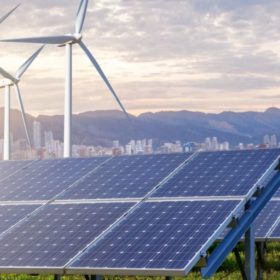
Study: 100% global energy system feasible
Several scientist have joined to rebut an Australian article that questions the feasibility of a global energy transition. For this purpose, they have gathered hundreds of studies on energy systems and conclude, that there are neither fundamental technical nor financial barriers to achieve 100% renewable energy supply.
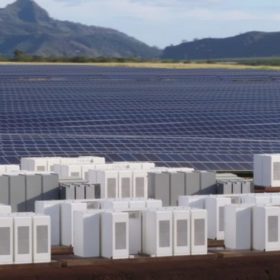
Solar, wind will drive the value of energy storage in the US
A much heralded report shows solar and wind will lower wholesale prices, but it also shows a coming evolution in the pricing profile of the grid. These shifts in timing, shape, regularity and length will drive energy storage demand.

PV inverter market becoming more diversified as price pressure intensifies – IHS Markit
PV inverter shipment volumes have gone up recently, but an increasingly competitive market has seen declining prices, forcing manufacturers to think out of the box to find new business applications for their products.
Turkey introduces tax exemption for solar up to 10 kW
Although the promised new provisions for net metering are not in force yet, the Turkish government has prepared the ground for future development by granting residential projects under the upcoming scheme an exemption from the 5% income tax on excess power delivered to the grid.
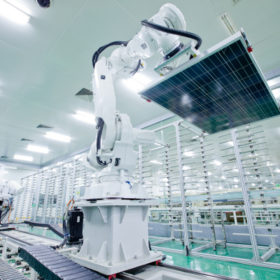
JinkoSolar hits new output records for p-type and n-type
Chinese module giant JinkoSolar today announced that it hit record power output levels for modules based on p-type and n-type technology. Both records are confirmed by TÜV Rheinland in Shanghai.
Shuangdeng Group wins Afghanistan’s tender for 40 MW hybrid solar project
The Chinese provider of storage and back-up power systems has been awarded the $59.7 million contract to build the facility, which will be located at an industrial area in the Nangarhar province. The tender had been issued in September 2017.

Court orders Yingli to repay $10.6 million in medium term notes
A court in China has ruled that Baoding Tianwei Yingli New Energy Company Limited must pay back RMB 65.7 million in medium term notes, due from 2015 and 2016. The Yingli Green Energy Holding Company Limited subsidiary plans to appeal the decision.
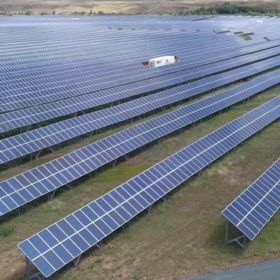
T Plus begins work on two solar facilities totaling 105 MW in Russia
The two solar plants, both located in the region of Orenburg, are scheduled for completion by early 2019.

By 2030, EVs could outnumber the total vehicles in India today
To smoothen this transition, the country needs to build fast solar PV-powered charging stations. In 2017, there were only 220-250 operational charging stations in India, compared to 56,000 petrol stations.
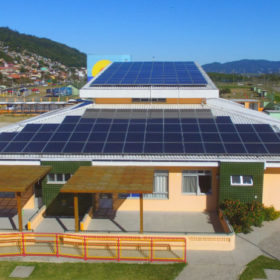
Brazil now has 250 MW of solar under net metering
According to data from Brazilian association ABSOLAR, Brazil currently has 27,803 solar PV systems connected to the grid, which benefit 32,924 consumer units and total more than BRL 1.9 billion (around $515 million) in accumulated investments since 2012.
