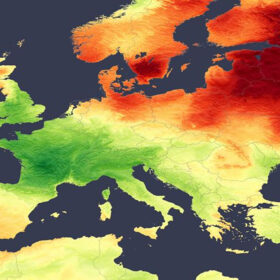
Western Europe sees September solar slump
In a new weekly update for pv magazine, Solcast, a DNV company, reports that low-pressure systems caused cloudier skies and reduced irradiance in Southern and Western regions in September, while areas further north and east enjoyed sunnier weather. A series of low-pressure systems centered over France led to the biggest drop in irradiance by up to 25%.
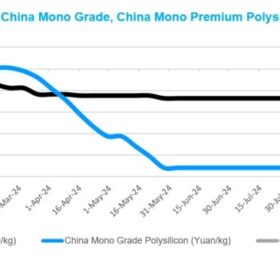
Polysilicon prices remain stable ahead of U.S. Department of Commerce’s anti-dumping ruling
In a new weekly update for pv magazine, OPIS, a Dow Jones company, provides a quick look at the main price trends in the global PV industry.
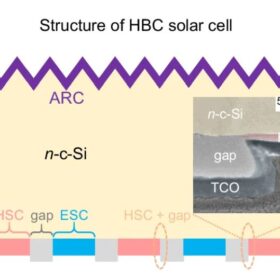
Longi reveals details of 27.09%-efficient heterojunction back contact solar cell
In a new paper published in nature communications, the Chinese solar manufacturer explained that the heterojunction back contact cell it unveiled in late 2023 achieved one of the highest open-circuit voltage ever reported for this cell technology, as well as smaller than usual short-circuit current losses. The results were confirmed by Germany’s Institute for Solar Energy Research (ISFH).

Off-grid solar appliance repair training a must for remote communities
An Australian Research Council funded report co-authored by Sydney-based University of New South Wales and UK-based charity SolarAid says the off-grid solar sector should do more to enhance its product repair initiatives.

Powering restaurants with rooftop PV, reversible fuel cells
Researchers have simulated the operation of bifacial PV and proton exchange membrane reversible fuel cells across restaurants in five different US states. Taking into account varying rates of bifacial PV’s rearside gains, they found that LCOE was as low as $0.029 per kWh.
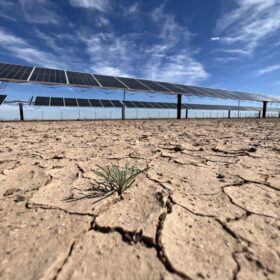
California farmers developing 20 GW solar-plus-storage plan
The Golden State recently signed AB 2661, granting the Westland Water District authority to develop transmission lines that will enable solar energy and storage projects on 130,000 acres of drainage-impaired farmland.

Solar corporate funding down 23% so far this year
Total corporate funding in the solar industry reached $22.3 billion in the first nine months of 2024, down 23% year on year. Mercom Capital Group says global uncertainties are affecting investor confidence, but an increase in debt financing and resilience in newly announced large-scale project funding are bright spots for the sector.
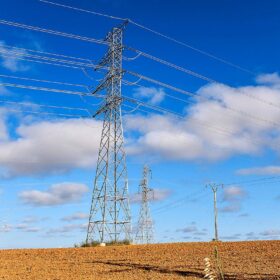
Grid defection is profitable in some solar-rich U.S. locations
Researchers from Canada’s Western University assessed eighteen case studies across thirteen US states and found in areas an economic case for disconnecting from the electricity grid in some areas with high solar irradiation and high electricity rates. They say economic grid defection and utility death spirals are becoming salient issues in the US.

Hungary expected to surpass 300,000 residential solar installations
Hungary’s Ministry of Energy says it will support more than 25,000 households with residential solar installations through its subsidy scheme, which launched earlier this year, taking the total number of installations to in excess of 300,000.

Serbia signs deal for 1 GW of solar, 200 MW of battery storage
An implementation agreement is in place between Serbia’s Ministry of Mining and Energy, utility company Elektroprivreda Srbije (EPS) and a consortium of Hyundai Engineering and UGT Renewables for six new solar plants totalling 1 GW. Up to 200 MW of battery storage will be developed across the sites.
