
Alsym Energy launches sodium-ion battery line
The Massachusetts-based startup says its new battery is non-flammable, non-toxic, and uses non-FEOC (Foreign Entity of Concern) materials, aiming for a lower levelized cost of storage (LCOS). The technical specs provide some highlights as well.
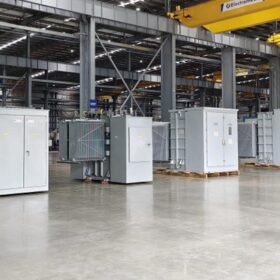
Developers secure US solar tax credit by ordering transformers
Solar developers in the United States are turning to custom-built transformers to meet new US Department of the Treasury rules for “physical work” and secure the 30% Investment Tax Credit amid tightening start-of-construction requirements.
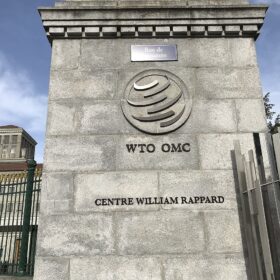
What WTO can still do to regulate global cleantech trade
pv magazine spoke with energy and environmental law expert Anatole Boute about the past and future role of the World Trade Organization (WTO) in regulating trade disputes related to clean energy technologies amid current geopolitical tensions. He noted that despite recent protectionist efforts to revive the solar manufacturing industry, the European Union still strives to remain compliant with WTO rules.
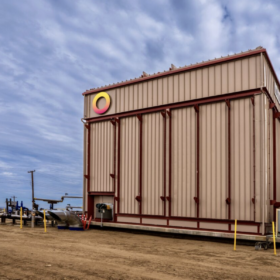
Rondo Energy’s 100 MWh heat battery powered by 20 MW of onsite solar
Rondo Energy’s 100 MWh heat battery, powered by 20 MW of onsite solar, could store industrial heat by using low-cost grid electricity generated during sunny and windy hours, the company said.
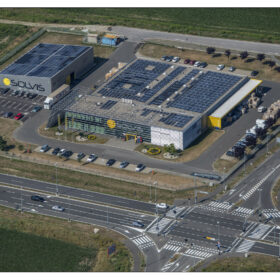
Croatia’s regulatory deadlock is strangling large-scale solar
Regulatory inaction on grid fees has stalled 3.5 GW of large-scale renewables in Croatia, mostly solar, with developers such as Solvis citing a lack of stable grid-connection rules as a barrier to planning and investment.

European developers signed 19 PPAs for 630 MW in September
Swiss-based analytics firm Pexapark recorded 19 power purchase agreements (PPA) in Europe this September, as PPA prices across most major European markets fell month-on-month.

Mercedes unveils car with 20% efficient ultra-thin solar coating
Mercedes-Benz unveiled its first car prototype with a silicon-free, 20%-efficient nanoparticle solar coating that powers the vehicle even when off and uses modules thinner than a human hair.

New Zealand approves 200 MWh solar-plus-storage project
A 179 MW solar-plus-storage project near Auckland has secured approval from an independent panel, allowing a commercial decision if the project remains viable under the imposed build and operating conditions.
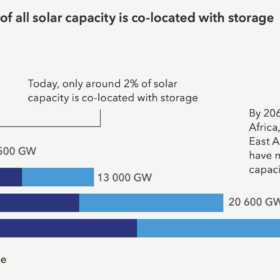
Nearly half of solar capacity will be co-located with storage by 2060, says DNV
DNV’s Energy Transition Outlook 2025 report also predicts that distributed generation solar should begin outpacing utility-scale installations in some parts of the world by 2060. It adds that the levelized cost of electricity for solar is beginning to plateau and is expected to slow to an annual drop below 1% by the 2050s.

DR Congo provides grants for minigrids, solar home systems
The Mwinda Fund is aiming to distribute $500 million in grants for minigrids, solar home systems and clean cooking solutions in DR Congo by 2030. It is already backed by $65 million in funding from the World Bank and $7 million from the Global Energy Alliance for People and Planet.
