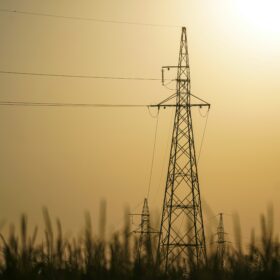
Optimizing solar-plus-storage operation for markets with imbalance penalties
Scientists in Japan have used a deep reinforcement learning–based AI model to calculate discrepancies between the planned and actual electricity supply volumes in PV-battery systems operating in markets where grid imbalances are penalized. Through a series of simulations, they found that the proposed methodology can reduce imbalance penalties by approximately 47%.

Romania drafts cybersecurity rules for PV, cogeneration up to 1 MW
Romania plans to amend its energy law to require the National Cybersecurity Directorate (DNSC) to define technical standards for PV and cogeneration systems up to 1 MW, aimed at preventing data breaches and safeguarding grid operations.
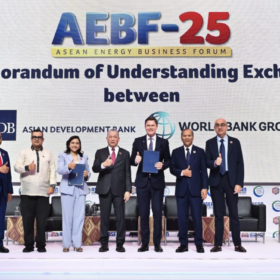
ADB, World Bank commit $12.5 billion to ASEAN Power Grid plan
The Asian Development Bank (ADB) and World Bank have launched a $12.5 billion initiative to finance regional power interconnection in Southeast Asia under the ASEAN Power Grid program.

Energy storage reshapes data center siting amid US regulatory pressure
Power cut regulations and slow permitting are driving US data centers toward storage-backed, grid-independent designs.

Singapore approves 1 GW hydropower import project from Malaysia
Singapore has conditionally approved a 1 GW hydropower import project from Malaysia’s Sarawak state, with first deliveries expected around 2035.

Deployable tracker-based rooftop PV system for stadiums
An international research team has developed a tracker-based rooftop PV system that can be installed on both new and existing stadiums. The proposed design reportedly allows for easier deployment and delivers higher power output compared to conventional stadium PV covers.
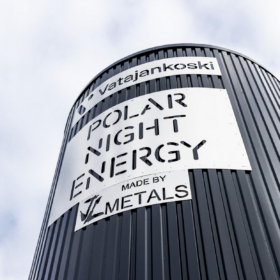
Ireland sets four-hour, 75%-efficient, 201 MW storage target by 2030
EirGrid, the transmission system operator (TSO) for the Republic of Ireland, has launched a consultation outlining how it will procure its first long-duration energy storage (LDES) capacity.

Mexico targets up to 9.5 GW of solar and wind by 2030
Mexico’s Secretaría de Energía (Sener) plans to add 6.4 GW to 9.5 GW of renewable capacity while keeping state-owned CFE’s share above 54%, integrating storage and efficiency measures to stabilize the grid.

Solar, off-grid systems key to Cameroon’s electrification
An international research team has found Cameroon exhibited a slow but obvious move towards equitable electrification between 2015 and 2024, with an increased focus on distributed renewable energy sources.

Improving sodium-ion battery stability with calcium
Researchers in Japan have adopted a new calcium-doping strategy to improve the stability and electrochemical properties of NFM, a cathode material used in sodium-ion batteries. The new technique enhances crystallinity and increases the interlayer spacing in NFM, resulting in higher performance compared to NFM treated with conventional processes.
