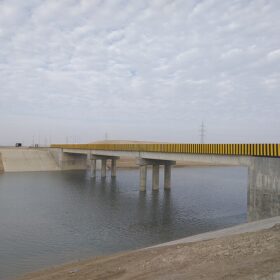
Canal-top PV for Afghanistan’s massive irrigation project
A team of scientists has simulated covering 20% of the Qush-Tepa irrigation canal with PV panels. To this end, the researchers developed a framework, termed an integrated techno-economic-environmental assessment, that can be applied elsewhere. “It explicitly quantifies energy production, water-evaporation reduction, land-use savings, and economic performance within a single analytical structure,” one of the researchers said.
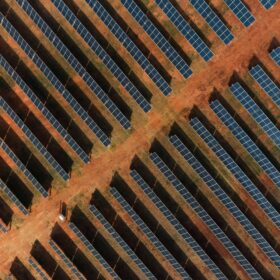
Afghanistan starts building 40 MW of solar
Afghanistan has started building a 40 MW solar project, with completion expected within 18 months.

Multiple designs of photovoltaic-thermal collectors
Scientists have modeled eight different kinds of PVT systems, some with a glass covers and some without. They found the worst efficiency was achieved in uncovered systems with parallel round tubes.
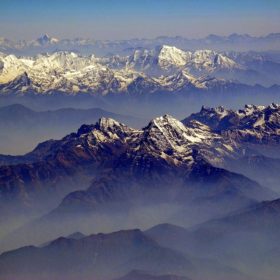
Off-grid solar for Himalayan food chains
Decentralized solar devices such as PV-powered portable irrigation pumps are technically viable solutions to meet the energy needs of food value chains across the high-altitude Hindu Kush Himalaya region, according to a new report by the International Renewable Energy Agency (IRENA).

Afghanistan kicks off tender for another 40 MW solar project
The facility will be developed under the World Bank’s Scaling Solar initiative on a public-private partnership basis in Herat province.
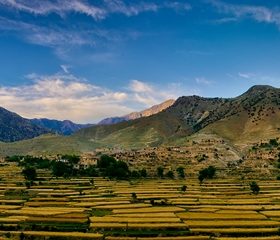
Afghanistan issues 40 MW solar tender
The nation’s Ministry of Energy and Water is seeking developers for a plant on an industrial park at the center of a previous 40 MW procurement exercise.

World Bank injects $100 million to support solar in Pakistan
The funds will be used to implement the Sindh Solar Energy Project, a scheme aimed at increasing solar power generation and access to electricity in Sindh province.
Afghanistan announces EoI for 2 GW solar tender
Afghanistan’s Ministry of Energy and Water is calling for expressions of interest (EoI) for 2 GW of grid connected solar PV projects. The last date of submissions is December 20.
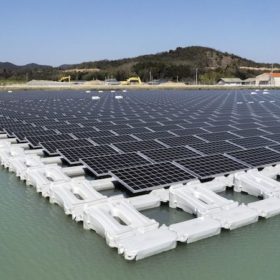
Floating PV goes everywhere
While a large floating solar power plant is being planned in Ukraine, within a huge renewable energy complex at the water reservoir Kakhovka, the Asian Development Bank has targeted Afghanistan, Azerbaijan, and the Kyrgyz Republic as three countries possessing strong potential for this emerging technology.
World Bank to help Afghanistan tender 40 MW solar project
The International Financial Corporation will help the country’s government competitively tender the project, which is expected to be developed through a public-private partnership.
