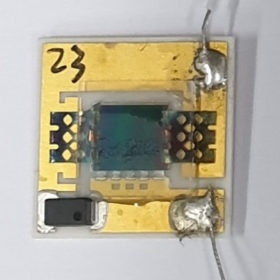
Multi-junction solar cell integrating radiative cooler
The triple-junction solar cell is based on indium gallium phosphide (InGaP), gallium arsenide (GaAs), and Germanium (Ge) and is made with a micro-grating made of glass, consisting of a two-dimensional x-framework structure fixed onto the surface of the solar cell. Its operating temperature was found to be 6 degrees Celsius lower than that of a reference cell without the cooling technique.

Chinese PV Industry Brief: GCL-Poly wants to move to Shanghai Stock Exchange
In other news, Longi raised funds to build another 18 GW of solar cell capacity and Suntech began work on its 10 GW module factory in Anhui Province.

Portable, space-saving photovoltaic towers
Researchers at the Indian Institute of Technology Delhi have developed solar towers that can be moved from one place to another and can generate 20-30% more power while requiring only 50-60% space compared to conventional mounting setups.

Subwavelength antireflective structure for thin-film solar cells
Consisting of a two-dimensional (2D) array of rings and pillars, the structure can improve the short-circuit current of a thin-film crystalline solar cell by over 50%, its creators say. The subwavelength AR structures are robust to certain degrees of fabrication errors, they add.
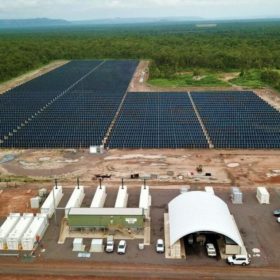
Tapping the offgrid solar market in India
Ashutosh Verma, the founder of solar appliance manufacturer Exalta India, says that the key to expanding the uptake of solar products in rural parts of India lies in improving access to finance.

Soluna unveils 1.28 kWh portable power generator
Soluna’s new generator can be combined in a two-unit system to reach a capacity of 2.5kWh. It features built-in 120V(AC) output, continuous AC output power of 1,200W, and peak output of up to 2,400W.
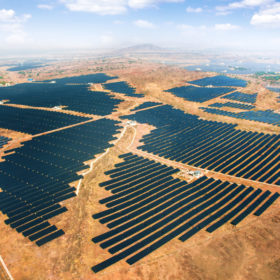
Indian hydropower producer to deploy 10GW of PV over next 10 years
SJVN Limited, an Indian state-owned hydropower producer, has revealed plans to develop 10 GW of solar power projects over the next five years.

Making the case for perovskite quantum dots
Quantum dots, a type of semiconductor based on tiny nanometer sized particles, are a cause for excitement in many disciplines thanks to their unique electronic properties. In solar cell technology, quantum dots fabricated from perovskites could have several advantages over more commonly researched “bulk” perovskite materials, and researchers are beginning to take note of these. A group of scientists in China evaluated recent progress in perovskite quantum dot solar cells, noting both strong potential and a long way to go for this early-stage technology.
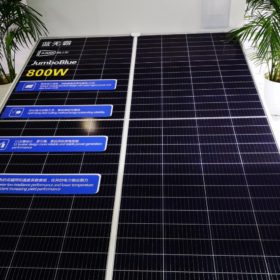
Chinese PV Industry Brief: JA Solar increases production capacity in Vietnam, IDG Energy enters solar business
JA Solar is expected to put another 3.5GW of cell capacity into operation by the end of June and Hong Kong-based IDG Energy Investment will venture into cell manufacturing by establishing a “foreign invested” project company.

ReNew Power commissions 17.6 MW wind-solar hybrid project in India
Indian developer ReNew Power has commissioned a 17.6 MW captive wind-solar project to supply clean energy to Grasim Industries Limited’s Chlor-Alkali unit in the Indian state of Gujarat. The second phase will involve an additional installation of 16.68 MW.
