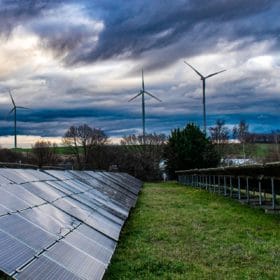
Module price increases to moderate PV project returns in India
PV module prices have risen by 15% to 20% over the last four to five months. PV modules account for about 50% to 55% of overall project costs, so such price increases could moderate debt service coverage metrics for developers.
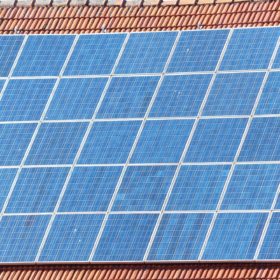
Chinese PV Industry Brief: New incentives for rooftop PV, TBEA increases stake in Xinte
China’s National Development and Reform Commission (NDRC) has allocated RMB500 million (US$78.1 million) for the incentive scheme for residential PV in 2021. Chinese electronic engineer TBEA is set to raise its controlling stake in polysilicon manufacturer Xinte Energy as it attempts to fund a planned 100,000-tons-per-year fab in Inner Mongolia.

Taiwan maintains feed-in tariffs for PV unchanged
The move is intended at helping the solar sector recover from the delays caused by the Covid-19 crisis. The Taiwanese government has also granted a three-month grace period for project completion.
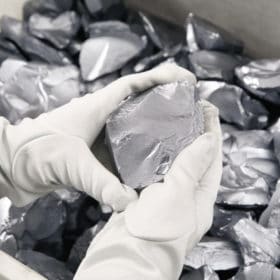
Has China extended solar grid-connection deadlines by a year?
Such a decision, which industry body the CPIA is adamant has already been announced, could make all the difference to investors struggling with a surge in equipment costs fueled by the polysilicon shortage. The all-important National Energy Administration, however, has yet to confirm whether the CPIA’s interpretation is correct.
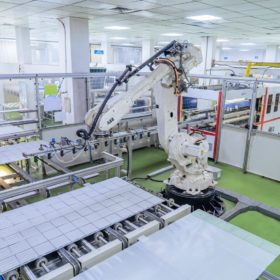
Indian PV manufacturer expands output capacity to 2.5 GW
Goldi Solar is setting up a 2 GW factory in the Indian state of Gujarat, increasing its manufacturing capacity to 2.5 GW. The new facility will use micro-gap module technology to produce mono-facial and bifacial modules with peak power outputs exceeding 600 W.
Indian utility seeks electrolyzer pilot projects
State-run power company NTPC wants to explore the feasibility of using hydrogen instead of diesel for back-up power and micro-grid application.

Upscaling PV-powered irrigation in India
India’s PV-powered irrigation mission has had a sluggish run, even though the PM-KUSUM scheme provides flexibility and budgetary support for system implementation. An IEEFA report highlights the need to address key challenges at state level to increase deployment.

Chinese PV Industry Brief: Canadian Solar plans 3 GW inverter factory
Moreover, Linyang Energy announced a plan to build a 10 GWh lithium-ion battery manufacturing facility in Qidong city, Jiangsu province. Chinese state-owned lender China Development Bank (CDB) has allocated RMB500 billion in special loans to support projects in the energy sector to help China reach its decarbonization targets

Maldives launch tender for 40 MW/40 MWh of storage
The government of the archipelago is tendering the deployment of two big batteries, with capacities of 24 MW/24 MWh and 16 MW/16 MWh, respectively, to store renewable energy for 22 islands.

Electricity derivatives to offer power offtake certainty for investors in India
An Institute for Energy Economics and Financial Analysis (IEEFA) report says that the sale of power in the futures market will benefit renewable energy developers and distribution companies alike.
