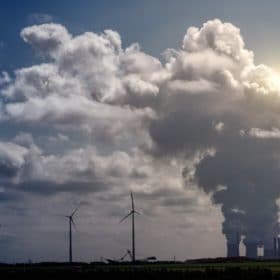
Cheaper renewables could leave new Indian coal assets stranded
A newly published Institute for Energy Economics and Financial Analysis report looks at the viability of under-construction coal-fired power plants and evaluates the risk of building additional coal-fired capacity in India’s electricity system.

Myanmar launches second tender for utility-scale PV
The country’s Ministry of Electricity and Energy (MOEE) is accepting proposals for utility-scale PV projects built on an independent power producer (IPP) and build–operate-own (BOO) basis.

New PV products, strategic agreements unveiled on day 1 of SNEC
The first day of the world’s biggest solar trade show and conference saw new PV products and strategic agreements unveiled by some of the biggest names in the industry. pv magazine China reporter Vincent Shaw and photographer Dave Tacon were on the ground to catch up with the companies and bring you the latest solar news from Shanghai, China.
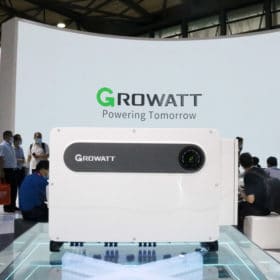
Growatt launches new inverter for commercial and utility-scale projects
The new product has an efficiency of 98.8% and a European efficiency of up to 98.5%. It features 10 independent maximum power point tracking (MPPT) inputs, with MPPT voltage ranging from 180-1000 V.

Longi unveils n-type, TOPCon bifacial module with 22.3% efficiency
The 144-cell module is available in six versions with power ratings ranging from 545 W to 570 W and efficiency between 21.3% and 22.3%. The product measures 2,256×1,133x35mm and weighs in at 32.3kg.

Scatec enters Indian solar market
Norway’s Scatec has acquired a 50% stake in Acme’s 900 MW solar project in Rajasthan. The project will benefit from a 25-year power purchase agreement with Solar Energy Corp. of India

SNEC opens its doors
The 15th edition of the world’s biggest solar exhibition got up and running in Shanghai today and we have exclusive images from the event.

Are oil and gas companies on the run?
Private sector fossil fuel spending on exploration is drying up just as modest rises in clean energy investments are being observed. With stock market investors increasingly embracing renewables, the IEA has observed positive signals in its latest energy investment report, but warned we are still doing far too little to keep global heating at bay.
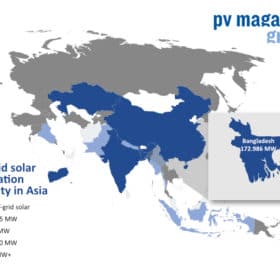
Solar improves living standards for Rohingya refugees in Bangladesh
Lamps, water pumps and filtration systems are an increasingly common sight in the camps of Cox’s Bazar with more extensive off-grid home systems having been brought along the refugee trail by some homeowners fleeing Myanmar’s Rakhine state.
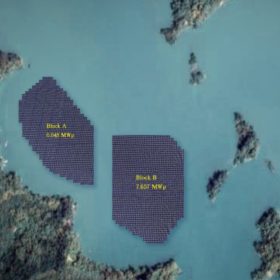
Taiwan’s Wushantou Dam to host 13.7 MW floating PV array
The floating plant will be deployed at the 20 MW Wushantou hydroelectric power dam operated by Taiwanese state-owned utility Taiwan Power Corp, in Tainan city.
