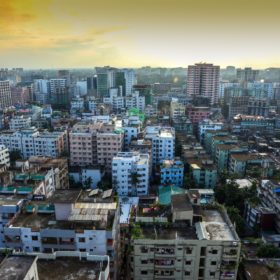
Bangladesh joins hydrogen energy race
The Bangladeshi government has launched a pilot hydrogen production project as part of its effort to reduce the country’s dependency on fossil fuels and accelerate the transition to clean energy.
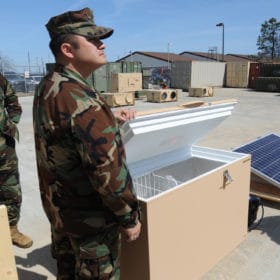
The Indian market for off-grid solar refrigeration
Standalone solar-powered refrigerators present a $20 billion opportunity in India for vaccine storage, milk chillers, households, micro enterprises, and cold storage for farm produce, according to a new report by Gogla.

The world won’t wait – Biden needs to catch up
The inauguration of Joe Biden as the 46th President of the United States has brought hope the country will play a central role in the world’s energy transition and combating climate change. However, rather than teaching other countries lessons, the U.S. will need to catch up with the rest of the world, and it needs to do so quickly – the world won’t wait for the U.S.
Beijing: China installed 48.2 GW of solar in 2020
With the nation almost doubling its new generation capacity figure for the year last month, the National Energy Administration is reportedly considering a joint solar and wind capacity target of 120 GW for this year.
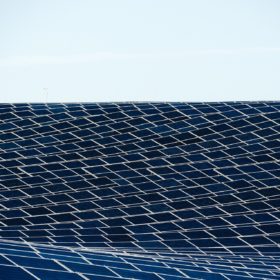
Jenny Chase predicts up to 194 GW of solar this year
Falling module prices will help PV post another record year after an estimated 132 GW was installed worldwide in 2020, according to an energy transition investment trends report published by Bloomberg New Energy Finance.
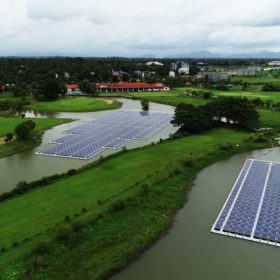
Floating solar plant online at Indian airport
The 452 kWp array features 1,300 photovoltaic panels across an acre of water split between two artificial lakes at the airport golf course.
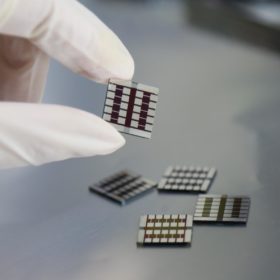
A pinch of chili gives perovskites a kick
Scientists in China found that capsaicin, the natural compound responsible for a chili pepper’s spicy flavor, can also act as a ‘secret ingredient’ in perovskite solar cells, making them both more efficient and stable. The group added capsaicin to the precursor materials of a common perovskite, leading to dramatic improvements in the resulting solar cell.
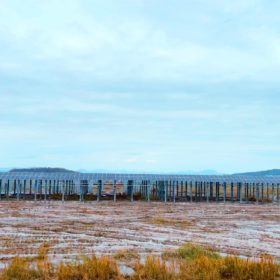
Tidal flats in eastern China to host 300 MW of solar
Developers have already connected 3 MW of capacity in what is purportedly destined to be the world’s largest PV array on a coastal tidal flat. The project, which is particularly challenging due to tidal fluctuations, will feature PV components designed to cope with salt and water damage.
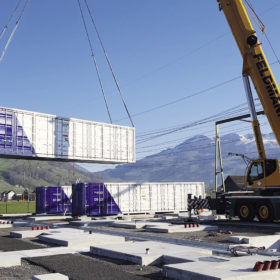
WoodMac predicts 30% drop in Asia-Pacific front-of-meter battery costs by 2025
A new Wood Mackenzie report suggests that costs for front-of-the-meter battery storage systems in the Asia-Pacific region could fall by 30% by 2025. The declining costs are already having a palpable impact, as 2021 has opened with a slew of large-scale battery project announcements.
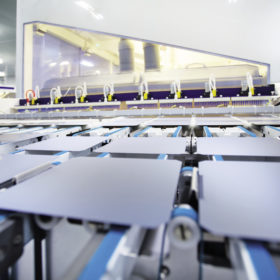
Chinese PV Industry Brief: Another 21 GW of module capacity and record PV growth for SPIC
Longi and Risen both announced plans to build up new module and cell manufacturing capacity. Furthermore, the State Power Investment Corporation (SPIC) has revealed it deployed more than 10 GW of solar power last year.
