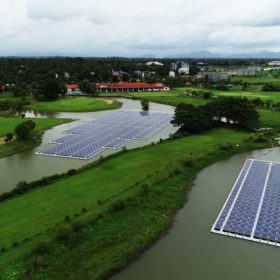
Floating solar plant online at Indian airport
The 452 kWp array features 1,300 photovoltaic panels across an acre of water split between two artificial lakes at the airport golf course.
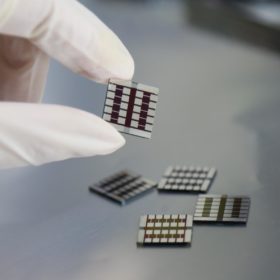
A pinch of chili gives perovskites a kick
Scientists in China found that capsaicin, the natural compound responsible for a chili pepper’s spicy flavor, can also act as a ‘secret ingredient’ in perovskite solar cells, making them both more efficient and stable. The group added capsaicin to the precursor materials of a common perovskite, leading to dramatic improvements in the resulting solar cell.
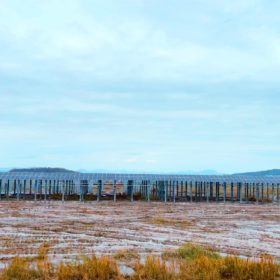
Tidal flats in eastern China to host 300 MW of solar
Developers have already connected 3 MW of capacity in what is purportedly destined to be the world’s largest PV array on a coastal tidal flat. The project, which is particularly challenging due to tidal fluctuations, will feature PV components designed to cope with salt and water damage.
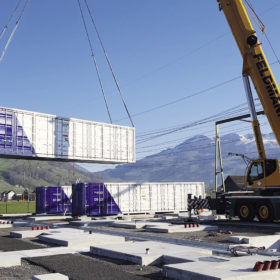
WoodMac predicts 30% drop in Asia-Pacific front-of-meter battery costs by 2025
A new Wood Mackenzie report suggests that costs for front-of-the-meter battery storage systems in the Asia-Pacific region could fall by 30% by 2025. The declining costs are already having a palpable impact, as 2021 has opened with a slew of large-scale battery project announcements.
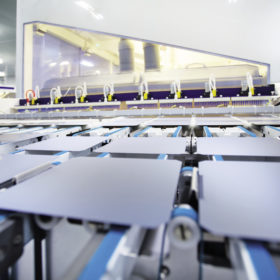
Chinese PV Industry Brief: Another 21 GW of module capacity and record PV growth for SPIC
Longi and Risen both announced plans to build up new module and cell manufacturing capacity. Furthermore, the State Power Investment Corporation (SPIC) has revealed it deployed more than 10 GW of solar power last year.
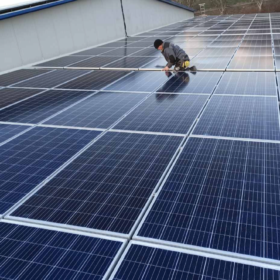
IFC says green recovery could drive $2.5tn renewables market this decade
The private-sector arm of the World Bank, which claims to leverage $3 of its own capital and $8 from third parties for every dollar invested in its blended finance funds, has attempted to quantify what devoting Covid recovery funds to green investment would mean for emerging economies.
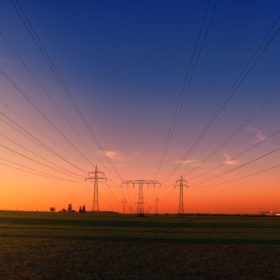
Is China really opening its energy market to EU enterprises?
In an interview with pv magazine, Frank Haugwitz – the director of the Asia Europe Clean Energy (Solar) Advisory (AECEA) – explained how the recent China-EU investment deal could offer more opportunities to European companies in China’s renewable energy market. He said the agreement shall provide transparency over policies, regulations, financing, and subsidies. And competition shall grow, especially in the C&I solar segment, he added.

Mitsubishi and Japanese university offer peer-to-peer trading alternative to FIT payments
Blockchain systems are being tested as a means of offering solar households revenue for excess power they generate, now the FIT program has ceased.
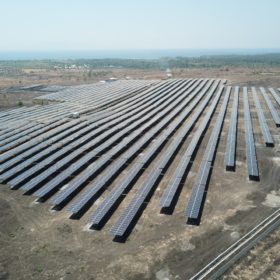
Eastern Indonesia may become hub for large scale PV deployment
The Indonesian government has announced the construction of a big PV plant in the eastern part of the country, explaining that the region is particularly suitable for solar development due to its dry climate and high solar radiation levels. The region is indeed the most suitable area for solar parks, due to land availability and high electricity generation costs.
Total to acquire 20% stake in Adani Green Energy
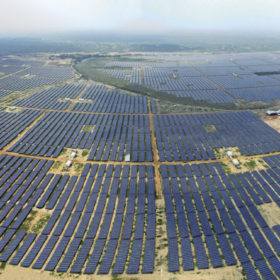
French oil and gas giant Total already owns a stake in developer Adani Green Energy’s 2.3 GW of operational solar assets in India through a joint venture.
