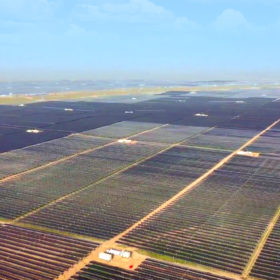
World’s largest solar plant goes online in China
Huanghe Hydropower Development has connected a 2.2 GW solar plant to the grid in the desert in China’s remote Qinghai province. The project is backed by 202.8 MW/MWh of storage.
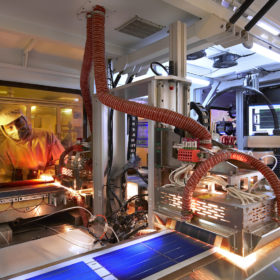
Trina kicks off production of 550 W panels
The PV module manufacturer has started mass production of its Vertex 550 W ultra-high-power modules at its factory in China’s Jiangsu province. It expects to start manufacturing 600 W panels in the first quarter of next year.

SolarPower Summit 2020: Policy measures and open-source information key to PV sustainability
Rising volumes of solar capacity are to be welcomed but, as panelists at a session of today’s SolarPower Europe event discussed, the technology must be kept ethical and responsible. That means industry working together; new, harmonized, mandatory and voluntary policy instruments; and a focus on quantifiable, life cycle-based investor criteria.
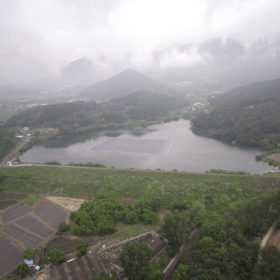
South Korean solar sector contests ‘unconstitutional’ biomass incentives
Dozens of solar companies are claiming renewable energy certificates issued for “wood-burning” biomass technology are unconstitutional as most such facilities are fueled by wood pellets co-fired with coal in older power plants. A constitutional court decision is expected within two years.
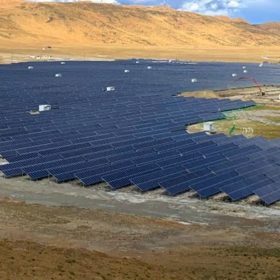
The world’s highest utility-scale solar plus storage project
Built in Gangba County, in Xigaze, Tibet, the 40 MW/193 MWh facility was deployed at more than 4,700m above sea level and is functioning as a demonstration project for the ancillary services the technology could offer the Tibetan grid.
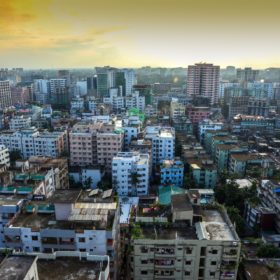
Bangladeshi renewables regulator vows to supply skilled solar workforce
In the wake of recent reports highlighting a global lack of clean-energy skills training, the country’s Sustainable and Renewable Energy Development Authority has said it will work with private companies to set up vocational courses.
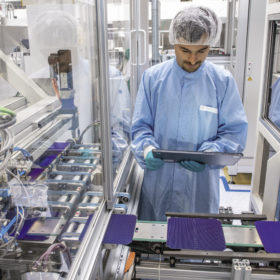
IRENA presents $2tn plan to drive 5.5m renewables jobs by 2023
Doubling down on renewable energy investment and energy transition spending is required to ensure a truly green global recovery from the Covid-19 crisis and its economic aftershock, claims the International Renewable Energy Agency.
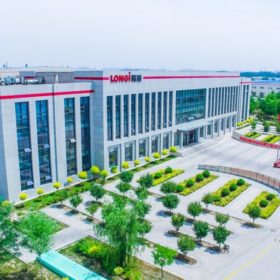
Longi begins mass production of its 540 W panels
Longi wants to expand the production capacity to 12 GW for its new highly efficient modules by the end of the year.

Indian state tenders 500 MW of solar
Projects can be established anywhere in Gujarat which has spare grid capacity, with the relevant substations listed on the Gujarat Energy Transmission Corporation website.
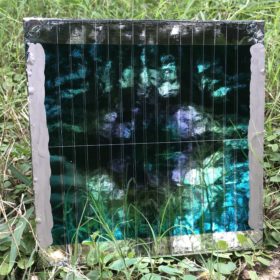
Organic solar PV cells on paper substrate for indoor use
Researchers at the Indian Institute of Technology Kanpur have developed 12×12 cm2 sub-modules from organic solar PV cells on a paper substrate that could be used to power flexible electronic devices under an indoor lighting environment. The modules are said to deliver a power density of up to 12 µW/cm2 under illumination from a 1000-lux cool‐white LED.
