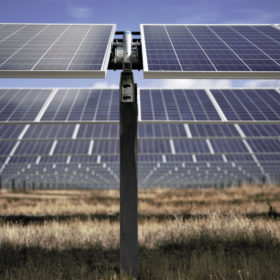
Wireless sensing for remote operation of off-grid tracker solar
Researchers in Thailand are proposing a wireless monitoring solution for PV in remote locations. The system, based on global standard ZigBee 2.4 GHz wireless technology, can read data and tilt solar panels in auto and manual modes.
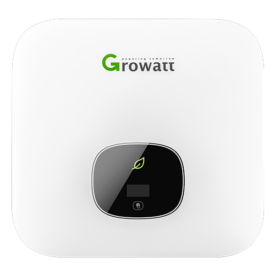
A new residential inverter with battery interface from Growatt
The inverters of the TL-XH series have efficiencies ranging from 98.2% to 98.4%. The 10.8 kg devices are compatible with double-glass modules and higher yields, the manufacturer claims.
Self-healing polymeric coating for organic PV
A new polymer developed by Indian researchers can mend its own cracks when exposed to ultraviolet light. The unique ability makes it an ideal candidate as a smart coating for photovoltaic solar devices to prevent damages and increase performances.

Recycling lead-acid batteries for perovskite solar cell manufacturing
Researchers from China are proposing to use spent battery lead for creating a perovskite that can be used in the production of solar cells that are based on this promising material. The proposed one-step process, which was tested in the production of a 17.38% efficient perovskite heterojunction cell, is said to be cheaper and less energy-intensive than other recycling processes for waste lead from lead-acid batteries.
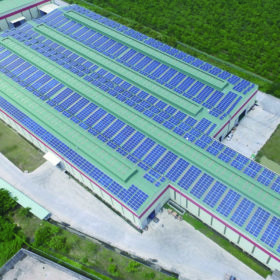
Taiwan to add 2.2 GW of new solar this year
According to GlobalData, the country saw deployment of 1.6 GW of new PV installations last year, with cumulative capacity reaching 4.3 GW. Overall, around 20 GW of PV power should be installed on the island by 2026.
How do solar cells work underwater?
Although cells lose much of their power yield when submerged, they may not be useless. Researchers in India say submerged cells could be used in monitoring sensors and for other commercial and defense applications. An amorphous silicon cell from Panasonic was tested in their study.

Chinese solar giant steps in to acquire rival in $250m swoop
Longi Solar has dramatically stepped in to take over fellow Chinese manufacturer Zhejiang Yize New Energy Technology, which operates 7 GW of module production capacity and 3 GW of cell facilities in northern Vietnam.

The beginnings of a post FIT-market
The annual installed PV capacity for Japan is expected to be 7 GW (DC) in 2019, according to RTS Corp. Cumulative PV installed capacity now stands at 63 GW. In addition to the robust introduction of small-scale PV projects, the development of already approved large-scale PV projects under the FIT program was advanced by the end of the year, say RTS analysts Takashi Ohigashi and Izumi Kaizuka.

Solar projects reprieved as Indian government declares coronavirus a force majeure
Lobby group the National Solar Energy Federation of India says around 4 GW of solar plant capacity is likely to be affected by component shortages after the outbreak of the virus in China.

A multi-level inverter for solar water pumps
Scientists in India have tested a new inverter topology with a single-phase, induction-motor water pump. The seven-level inverter, with five power semiconductor switches, is said to be particularly efficient at reducing switching losses thanks to a pulse width modulation technique.
