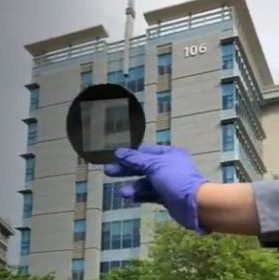
New transparent solar cell for window applications
South Korean scientists have transformed an opaque crystalline silicon solar cell into a transparent one by punching holes into it measuring around 100 μm in diameter. A neutral-colored, transparent c-Si substrate was used to develop the new cell, which is said to have an efficiency of up to 12.2%.

Power Ledger, Japan’s Kepco extend blockchain energy collaboration
Japanese utility Kansai Electric Power has extended a demonstration project with Australian P2P energy pioneer Power Ledger to track renewable energy certificates and trade PV-generated electricity.
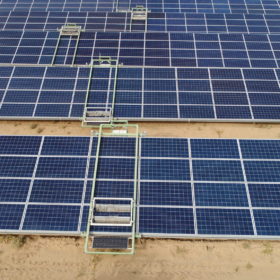
ReNew Power, South Korea’s GS E&C to build 300 MW of PV in India
The Indian developer will hold a 51% stake in the venture, with Seoul-based GS E&C taking the remainder. The capacity was awarded under Solar Energy Corp. of India’s tranche-IV auction earlier this year.

JinkoSolar to begin shipping Tiger bifacial modules
Chinese module manufacturer is stepping up its prowess with 314 MW of new high-efficiency Tiger modules being released to the market.

Date set for Panda Green state bail-out vote
The Hong Kong-listed, Chinese state-owned solar developer is in a race against time to settle a US$350 million bond which is due to mature on January 25. The bail-out, which will be put to the vote on December 30, will leave the company a further US$125 million shy.
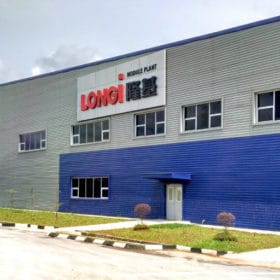
Another day, another $483m – of Longi production capacity plans
The Shaanxi-based solar manufacturer has made its 14th announcement this year of an intent to expand its ingot, wafer, cell and module output. Thus far – and we’re still three weeks short of year-end – the bill for the 112 GW of extra production spelled out in 2019 comes to a near $4.2 billion.

Taiwanese government proposes solar tariffs of US$0.13-0.19/kWh
The draft feed-in tariff scheme should be approved by the end of the month. Payments for residential solar systems are expected to fall only 0.34% but those for utility scale solar may be reduced by 2.2%. An increase is set to be granted to projects in remote areas and also to those which rely on high-efficiency modules.
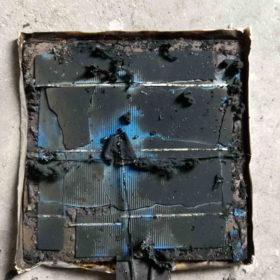
Scientists analyze toxic gases released from burning thin-film, PET-laminated modules
Scientists from China’s State Key Laboratory of Fire Science have analyzed the combustion behavior of flexible PET-laminated PV panels. They found toxic gases including sulfur dioxide, hydrogen fluoride, hydrogen cyanide and a small amount of volatile organic compounds are released when such a PV system burns.

Singyes set for name change
Now Chinese state-owned, the developer appears to want to draw a line under a traumatic two-year period which saw its fortunes reversed in dramatic fashion. Effectively now part of China’s Shuifa construction conglomerate, the proposed new name is intended to reflect the fact.
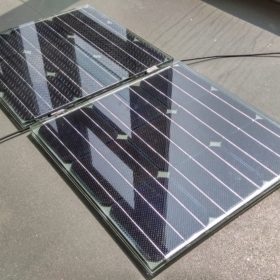
Walking on sunshine
Chinese scientists have developed a PV floor tile they say is suitable for pavements and cycling tracks. The devices were tested on a ‘green deck’ in Hong Kong. The developers say the tiles have demonstrated satisfactory solar energy conversion, anti-slip performance, heat-resistance and strength.
