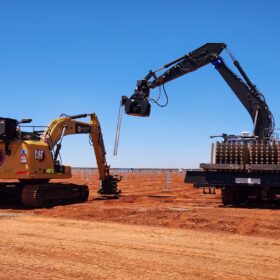
Australia backs Fortescue solar tech trial at Pilbara innovation hub
Australia’s renewable agency says the trial aims to demonstrate faster, lower-cost utility-scale solar deployment in remote regions.
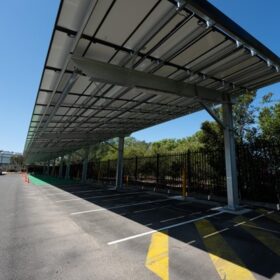
Australia’s S-Rack installs 83 kW solar carport for Parramatta Council EVs
S-Rack says its solar carport for Parramatta City Council in New South Wales demonstrates how tailored racking design can support municipal energy generation and electric vehicle infrastructure.

Australia funds SunDrive to scale copper solar cells
The Australian Renewable Energy Agency (ARENA) says its AUD 25.3 million ($16.5 million) investment will help SunDrive commercialize copper-based solar cell technology as a low-cost, silver-free alternative.
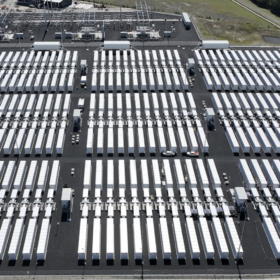
‘Catastrophic failure’ at Waratah Super Battery in Australia
A key infrastructure asset at one of the world’s biggest batteries has reduced operations and delayed completion for more than six months, with few details made public regarding the critical asset.
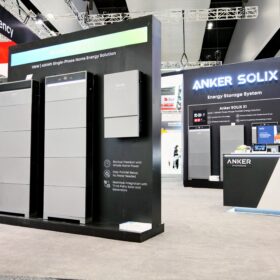
Anker SOLIX announces VPP-ready home energy solution
The upgraded residential energy system integrates solar generation with energy storage and EV charging in a single ecosystem that can cut household electricity expenses by up to 88% and installation time by 25%.

Australia’s Solar Sharer scheme could weaken case for batteries, says Rystad
Independent energy research firm Rystad Energy released analysis of Australia’s Solar Sharer scheme, which will give households three free hours of electricity in the middle of the day starting in July 2026.

Researchers develop antimony-doped n-type silicon ingots to enhance solar module mechanical strength
An international team is proposing to use antimony-doped Czochralski-grown silicon as an alternative to n-type silicon for photovoltaic applications. Their analysis showed that 140 μm as-cut planar antimony-doped wafers exhibit slightly higher mechanical strength compared to common wafers doped with phosphorous.

Solar cell inspection tool evolution set to slash manufacturing costs by billions
Researchers at the University of New South Wales in Sydney are working with the institution’s spinoff company BT Imaging to accelerate the commercialization of solar cell defect detection technology, thanks to a $1.4 million commercialisation project.
Australia plans nationwide three-hour free solar power offer from July 2026
Electricity retailers across Australia could be required to offer households three hours of zero-cost daytime power from July 2026 under a federal Default Market Offer reform aimed at smoothing demand and cutting system costs.

Key takeaways from All Energy Australia 2025
Despite the ongoing challenge of solar price cannibalization, Australia’s PV marketplace appears set for a period of acceleration. Renewable energy targets, supportive policy, and looming coal closures will require ongoing solar and storage installations – and a large pipeline is taking shape.
