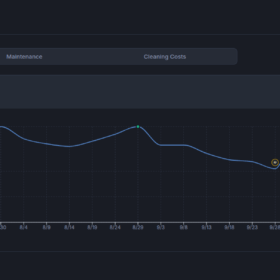
Canadian startup unveils AI tool for solar panel cleaning optimization
Swish Solar has an AI-driven tool that optimizes solar panel cleaning schedules to reduce soiling losses and operating costs. The platform uses data analytics and forecasting models to help operators time cleaning based on financial impact.
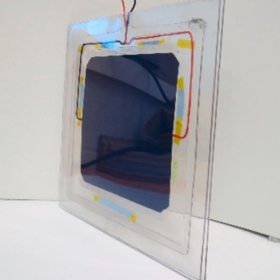
First attempt to build solar modules using polycarbonate encapsulant
Canadian researchers proposed a laminate-free solar module using polycarbonate instead of EVA and glass. The new encapsulation technique reportedly enables easy disassembly, reuse of solar cells, and open-source local manufacturing.
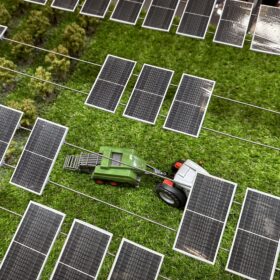
Survey finds 85.8% of Canadians support agrivoltaics
Canadian researchers conducted the first nationwide survey on public attitudes toward agrivoltaics, finding strong support across provinces with 85.8% of respondents in favor, although preferences varied by configuration. Opposition mainly stemmed from resistance to change, aesthetic concerns, and lack of awareness, highlighting the need for public education and updated policy frameworks to enable wider adoption.

Canada adds only 57 MW of utility-scale solar in 2025
The Canadian Renewable Energy Association is forecasting Canada’s cumulative solar capacity, which stands at 5.4 GW today, could surge to around 21 GW by 2035, driven by a healthy procurement pipeline across most provinces. Official deployment figures for behind the meter solar installations last year, which are driving Canada’s solar market today, are yet to be finalized.
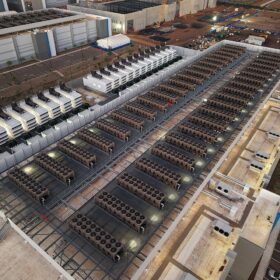
Battery management systems key to deploying batteries in data centers
A new study highlights the critical role of advanced AI-integrated battery management system technologies in monitoring, optimizing, and predicting battery performance for reliable and sustainable data center operations.
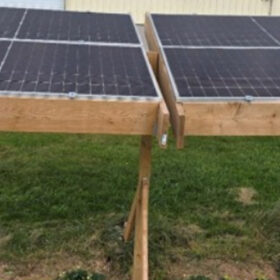
Agrivoltaics can help lettuce survive extreme heat
Scientists have grown organic romaine lettuce under 13 different types of PV modules, in an unusual hot Canadian summer. Their analysis showed lettuce yields increased by over 400% compared to unshaded control plants.

The Hydrogen Stream: EU Commission invites offtakers under Hydrogen Mechanism
The European Commission is advancing market matching for renewable and low-carbon hydrogen by inviting European offtakers to signal supply interest under the Hydrogen Mechanism, while Germany’s electrolysis rollout continues to lag official targets despite new EU-backed funding schemes.
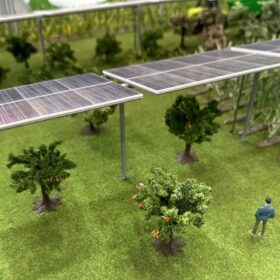
‘Agrivoltaics is not just a land-sharing concept, but a systems-level solution to some of the world’s most pressing challenges’
Scientists have conducted a six-sphere literature analysis of agrivoltaics, considering sustainability, soil–crop productivity, socioeconomic resilience, solar power generation, spatial efficiency, and species. They found that, under optimal terms, agrivoltaics may generate over $1 trillion in added global agricultural income.

PPA signed for Saskatchewan’s largest solar project
A 157 MW solar project, set to be the largest in the Canadian province of Saskatchewan, will be built following the signing of a power purchase agreement between French developer Neoen and the provincial utility. The project will be co-owned by four Treaty 4 Nations.
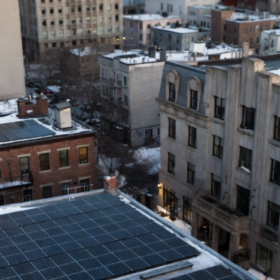
Awendio Solaris plans multi-gigawatt solar manufacturing hub in Canada
Awendio Solaris says it plans to invest about CAD 1 billion ($726.7 million) in a vertically integrated solar cell and module manufacturing facility and research center in Montreal, Quebec, targeting the Canadian and US markets.
