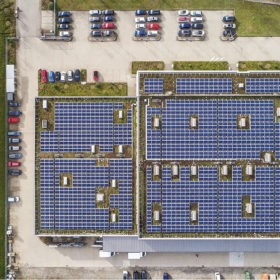
Weekend read: Is EU doing enough?
The European Union has set ambitious targets for solar PV expansion but is Brussels designing the right policies to support growth? Andreas Walstad investigates.

Canadian Solar resumes plans to list shares in Shanghai
Module manufacturer Canadian Solar first submitted an application for an initial public offering in June 2021.

Solarspace shifts TOPcon solar cell factory to full capacity
The second-phase launch of Solarspace’s $1.47 billion manufacturing facility brings its total global production capacity of n-type solar cells to 35 GW.
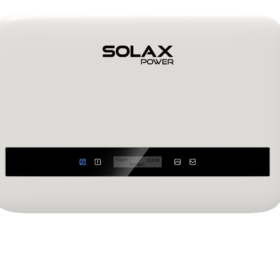
Solax Power unveils string inverters for residential PV systems
Solax Power’s new string inverters have an efficiency rating of 98% and a European efficiency of 97%. They feature two maximum power point tracking (MPPT) channels, with nominal power ranging from 2.5 kW to 6 kW.
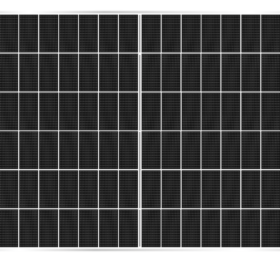
Huasun unveils 715 W heterojunction solar module
China’s Huasun launched a new line of five heterojunction (HJT) solar modules in 2022, with power outputs ranging from 680 W to 700 W. The company has now added a new 715 W module to the series, with an efficiency rating of 23.02%.
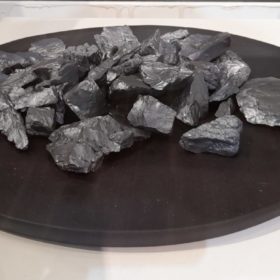
Polysilicon prices continue to drop
The China Nonferrous Metals Industry Association (CNMIA) says that polysilicon prices have fallen by more than 42% since November, when the raw material reached its highest price point.

Video: Singapore Solar Exchange CEO discusses polysilicon prices in 2023
Sakura Yamasaki, the founder and CEO of Singapore Solar Exchange, speaks to pv magazine about China’s recent decision to launch the trading of industrial silicon futures, following a year of high polysilicon prices. Yamasaki discusses the potential impact on polysilicon prices in China, the outlook for domestic price stabilization and risk mitigation, and what this might mean for the global solar industry in 2023.
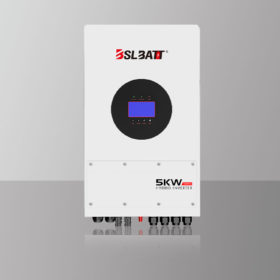
Bslbatt unveils hybrid inverter for residential applications
Bslbatt has released three new hybrid inverters with nominal power ratings of 3.6 kW, 4.6 kW, and 5 kW. The line also has an efficiency rating of 98.0% and a European efficiency of 97.0%.

China aims to add 160 GW of wind, solar capacity in 2023
China’s National Energy Administration (NEA) says that the country added 65.7 GW of solar and 22.5 GW of wind in the first 11 months of 2022. It expects the nation to add 160 GW of wind and solar capacity in 2023.
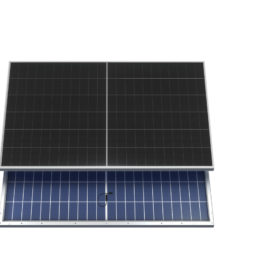
Hanersun releases 695 W TOPCon solar module with 22.37% efficiency rating
China’s Hanersun has unveiled its HItouch 6N module series, which is based on n-type TOPCon tech, 210 mm wafers, and half-cut cells. The monofacial and bifacial modules feature power outputs ranging from 605 W to 695 W and efficiency ratings of 21.38% to 22.37%.
