Chinese PV Industry Brief: New planned IPO and more solar glass deals
Huawei has strengthened its technology partnership with Chint, while TBEA is planning an IPO for its polysilicon unit Xinte Energy. Furthermore, glass manufacturers keep acting to overcome current bottleneck.
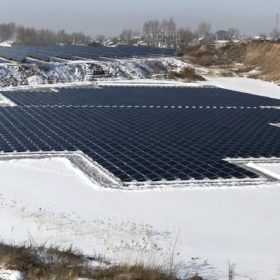
What happens to floating PV when the water surface freezes?
What happens to a floating PV system located in cold climates during freezing temperatures? How is the plant handled and which kind of risks could be associated with these unfavorable climatic conditions? We have sought to answer these questions with the help of Kane Wang, manager of Sungrow Floating’s system solution department.

Peeking into 2021: Green bonds to reach US$500 billion per year, solar on track to outrank oil and gas
Global management consulting firm PricewaterhouseCoopers has issued a general economic prediction for 2021. Aside from some general notes on GDP recovery post-Covid, the analysts’ notes were heavily focussed on climate and energy finance and policy.

GCL dilutes stock as senior note deadline approaches
Parent company hopes to raise $535 million from the move with $500 million worth of three-year senior notes owed by its solar project business due to mature on January 30.

Longi says appeal hearing for patent litigation with Hanwha Q-Cells is planned for April
In the first instance, the Düsseldorf Regional Court in Germany ruled in favor of Hanwha Q-Cells, but Longi Solar has appealed the judgment. There is also still a struggle for the validity of the patent between the photovoltaic companies at the European Patent Office. In addition to Longi Solar, REC is also reporting another partial success in the legal dispute with the South Korean photovoltaic manufacturer.
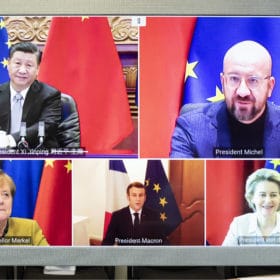
EU-China Comprehensive Agreement on Investment opens manufacturing options, dodges forced-labor issues
The European Commission has finalized its long-anticipated investment agreement with China. While some renewable energy businesses might benefit from improved investment security, IP protection and access to legal remedies in China, the Commission did not address the issue of Uyghur forced labor in China. As a majority block in the European Parliament had previously demanded from the Commisison to develop a firm policy to end forced labor in China, there is reason for doubt that the agreement as it stands will be adopted by the EU Parliament.
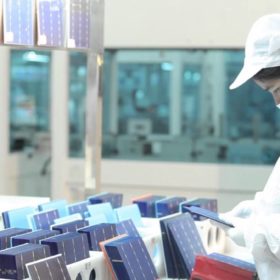
Chinese PV Industry Brief: Jinko begins work on 20 GW cell factory
The solar cell manufacturing facility, located in China’s Yunnan Province, is expected to raise Jinko’s cell capacity to 30 GW by the end of 2021.
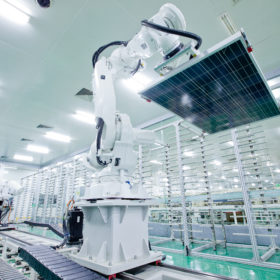
JinkoSolar announces 23.01% efficiency for n-type monocrystalline panel
The PV module relies on Jinko’s TOPCon mono cell technology, for which a record efficiency of 24.9% was announced last week. TÜV Rheinland has confirmed the result.
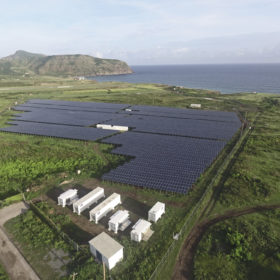
New method to build microgrids based on solar, hydrogen
The use of polymer electrolyte membrane fuel cells as backup power generation in solar microgrids could drive down costs and improve efficiency, according to an international group of researchers. They have proposed a new energy management system that could be ideal for hybrid solar-hydrogen microgrids in remote locations.
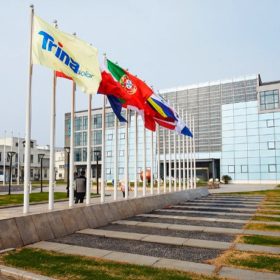
Chinese PV Industry Brief: Huge orders for Trina Solar and JYT Corporation
Trina Solar has secured a 4 GW solar module order from US company Nextera Energy and wafer manufacturer JYT Corporation closed deals to supply a total of 1,906,000,000 wafers.
