The Hydrogen Stream: Germany audit warns of missed H2 goals
Germany’s Federal Court of Audit (Bundesrechnungshof) says the nation’s hydrogen strategy is falling short despite heavy subsidies, while Pulsenics and Endua have launched the first commercial AI-based monitoring system to improve electrolyzer performance under fluctuating renewable power conditions.
Market trust key for perovskite solar commercialization
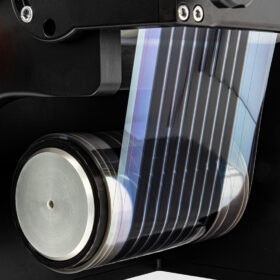
In a new perspective paper, researchers from Dresden University of Technology and Denmark’s InfinityPV analyzed scientific research and more than 100 companies involved in organic PV and perovskite solar cell manufacturing. Their findings show that the commercialization of these technologies depends on the PV industry’s ability to increase financial transparency.

The Hydrogen Stream: Australia opens second Hydrogen Headstart round
The Australian government has aunched the second round of its Hydrogen Headstart program to provide revenue support for large-scale renewable hydrogen projects, while the UK government is seeking industry input on rules for hydrogen-to-power participation in its capacity market.
Vehicle-integrated photovoltaics for biofuel-powered transport trucks
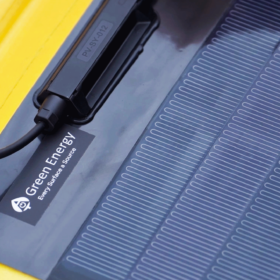
DHL Freight Sweden and Denmark-based Green Energy Group announced a one year nationwide pilot in Sweden to test the use of vehicle integrated PV with a fleet of biofuel-powered transport trucks.
Stochastic optimization for PV-powered EV charging stations
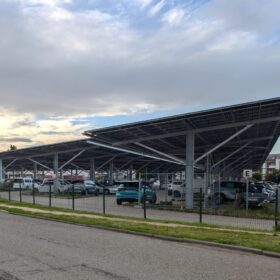
Scientists have developed a new optimization approach that combines both day-ahead optimization and real-time optimization to improve operations of PV-driven EV charging stations. The framework is based on the autoregressive moving average and the Latin hypercube sampling models.
The Hydrogen Stream: France, Germany back nuclear H2, Southwestern Corridor
France and Germany have pledged support for the Southwestern Hydrogen Corridor and have agreed to collaborate on nuclear-based hydrogen support and joint research.

Automating perovskite solar cell materials research
A Danish research group is working on an automated material discovery and performance optimization platform for perovskite solar cells. The scientists claim a unique combination of robotics, advanced measurement equipment, and machine learning.
How to store PV power with hybridization of lithium-ion batteries, supercapacitors
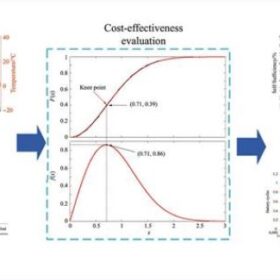
Researchers in Denmark have developed a new sizing strategy to combine PV system operation with lithium-ion batteries and supercapacitors. The proposed approach is claimed to reduce annual battery cycle by 13%.

The Hydrogen Stream: EIA sees mostly gray hydrogen in US by 2050
The US Energy Information Administration (EIA) says US hydrogen production will increase about 80% by 2050, mainly from natural gas with minimal electrolyzer use, while key industry players advance large-scale green hydrogen projects and expand hydrogen vehicle support across global markets.
Danish startup offers CIGS-based VIPV solutions for commercial transport
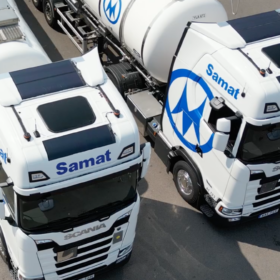
Denmark’s Green Energy Group provides vehicle-integrated PV solutions for road transport customers in Europe and North America. Its PV systems feature copper-indium-gallium-selenide thin film technology in solutions that are designed to extend onboard battery life, cut Co2 emissions, and decrease diesel fuel consumption.
