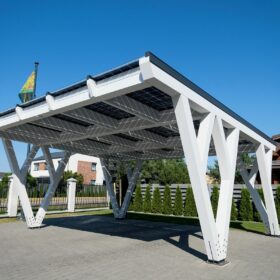
Solitek launches solar carport for residential, commercial applications
Lithuania-based Solitek has launched a carport product line featuring 370 W glass-glass frameless modules. It is designed to withstand a snow load of up to 2.5 kN/m2 and 27m/s of wind loads.
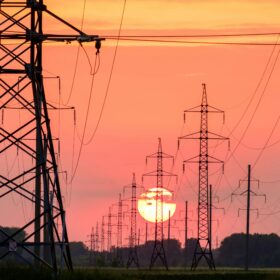
Poland allocates 494 MW of solar in 2023 auctions
Poland’s Energy Regulatory Office has awarded 494 MW of solar in largely unsubscribed auctions this year. It allocated 123 MW for installations smaller than 1 MW with the lowest bid of PLN 284.95 ($71.28)/MWh, and 471 MW for projects larger than 1 MW with the lowest bid of PLN 272.91/MWh.
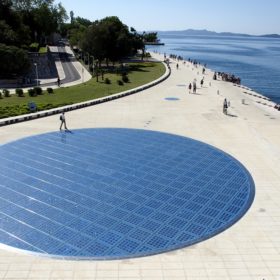
Croatia’s solar streak marred by 4-year finalization waiting times
Zvonimir Meštrović, head of solar business development at Croatian energy company ENCRO, tells pv magazine that sunny days and an ideal political climate set the Balkan country up to harvest large volumes of solar. However, he says bureaucratic red tape is weighing down the industry.

The Hydrogen Stream: Brazil reveals $3.6 billion hydrogen production plan
Brazil has announced a $3.6 billion hydrogen production plan, Adnoc has launched a green hydrogen refueling-station pilot in the United Arab Emirates, and the European Union has moved forward on the establishment of EU-wide hydrogen rules.

Casting the net for solar recruits
Solar-industry companies need to forget ideas about office-based roles and look far afield to source the recruits necessary for the energy transition – and then they need to keep them loyal by offering a rewarding career.
Serbia’s Domi Eko commissions 150 MW TOPCon solar module factory
The factory is located in Velika Plana, central Serbia. The production equipment was provided by Italian manufacturer Ecoprogetti.
Inion Software unveils PV plant short-term performance forecasting, diagnostic platform
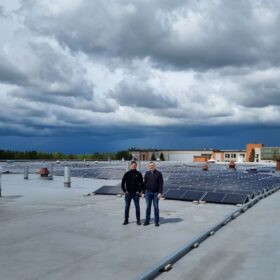
Inion Software, a Lithuanian PV power plant equipment specialist, has unveiled a platform that combines model-based performance forecasting with plant monitoring functionality. It offers insights based not only on production data, but also weather data, along with site parameters and PV capacity information.

The Hydrogen Stream: EU to launch 2nd green hydrogen auction in spring
As the European Union launches the first pilot auction this week, it also announces it will double down in spring, while also supporting a collaboration with Brazil for the construction of a production facility to be used in Croatia.
Hithium, Solarpro to build 55 MWh energy storage facility in Bulgaria
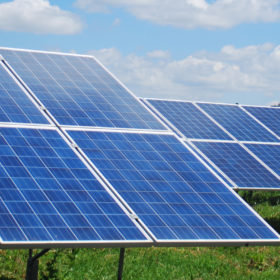
Hithium and Solarpro say they will start construction on a 55 MWh energy storage facility in southwestern Bulgaria next year.

Solar could be crowned ‘king’ of Latvia’s energy market
Latvia recorded 54 MW of installed solar capacity at the end of last year, according to International Renewable Energy Agency (IRENA) statistics. This is “miserable” compared to the country’s Baltic siblings, one energy expert tells pv magazine. But if Latvia lands the right utility-scale opportunities, solar could be one of its renewable energy stars.
