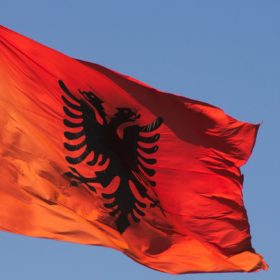
Solar could address Albania’s climate-change-sensitive hydropower dependency
Photovoltaics could offer peak generation at times of the year when the nation needs it most, says IRENA, but plenty will have to be done, including upgrading an aging grid and training an army of installers and building energy auditors.
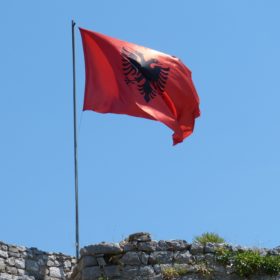
Voltalia wins Albania’s 100 MW PV tender with bid of €0.02989/kWh
The French developer will sell 70% of the power generated by the facility to Albanian power utility Operatori i Shpërndarjes së Energjisë Elektrike SH.A. (OSHEE) under a 15-year PPA and the remaining portion will be sold on the spot market.
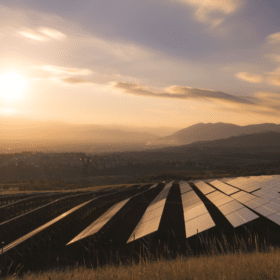
Romania’s first module factory
Romanian manufacturer Karpat Solar has acquired a 100 MW panel production line from Spanish provider Mondragon. The manufacturing facility will be located in Transylvania.
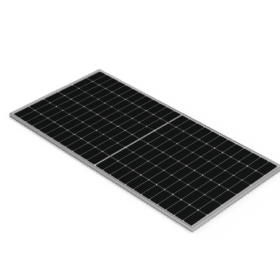
Bisol launches half-cut module with multi-busbar tech
The new panel was conceived for applications in the rooftop segment. It features an efficiency of up to 20.5% and a power rating of 360/455 W. The Slovenian module manufacturer used 166×166 mm wafers for the new product, as it claims they currently provide the best power and size ratio.
Poland to add another 11 GW of PV over the next five years
The Eastern European country is expected to add around 2 GW per year over the next five years, according to Polish research institute Instytut Energetyki Odnawialnej. By the end of 2025, its cumulative installed PV capacity should reach 14.93 GW.
Holographic film to protect solar panels from overheating
Russian scientists have developed a holographic film based on prismatic concentrators that reduces the operating temperature of solar panels, including thermal-photovoltaic devices. They claim the patented, low-cost technique can even improve PV module efficiency in cloudy weather.
Polish coal power provider secures 15-year PPA for 75 MW solar plant
Poland’s second-largest coal power producer, ZE PAK, will sell solar power to Polish telecommunication group Polsat. The $45.5 million project is being financed by a group of Polish banks.

Saipem wants to set up green hydrogen production in Italy, Albania and Morocco
The Italian gas contractor started to develop three green hydrogen projects in the southern Italian region of Apulia and has identified land for potential projects in Albania and Morocco.
Poland hits 4 GW milestone
The Polish grid operator connected 2.63 GW of PV capacity in 2020, while newly installed capacity surpassed 150 MW in January 2021.

Russia introduces net metering for small-sized PV
The new net metering provisions came into force three years after the legislative process was launched. Power surplus will be sold to the grid at a rate of up to RUB2/kWh ($0.026).
