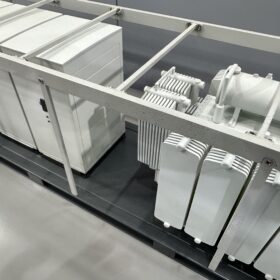
The Hydrogen Stream: Atome secures $420 million debt for Paraguay plant
Atome says it has secured a $420 million debt package for a $650 million low-carbon fertilizer project in Paraguay producing 260,000 metric tons (MT) per year, while Asahi Kasei says it has begun installing a 1 MW-class electrolyzer at Finland’s first commercial hydrogen refueling station.

EU opens third cross-border solar tender
The EU’s third cross-border solar tender is offering a share of €54.9 million ($63.8 million) to solar-plus-storage projects in selected Bulgarian districts and ground-mounted solar projects in Finland, with funding provided by Luxembourg. The deadline for applications is September 1.
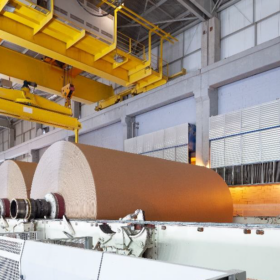
World’s largest steam-producing heat pump comes online in Finland
Turboden, part of Mitsubishi Heavy Industries, has energized what it calls the world’s largest steam-producing heat pump, delivering 12 MWth of superheated steam using low-grade waste heat and CO₂-free electricity with a coefficient of performance 10% above its guaranteed value of 2.

100 MW Hertz 1 battery enters operation after Estonia–Finland grid incident
The 100 MW/200 MWh battery energy storage project in Kiisa began operation on Feb. 3 as scheduled – just two weeks after a testing fault at the facility caused the most significant disturbance to the regional power grid since Estonia’s desynchronization from the Russian electricity system.

Finland adds 227 MW of utility-scale solar in 2025
Finland’s large-scale solar capacity more than doubled in 2025, buoyed by the commissioning of the country’s first solar projects larger than 50 MW. Another record year for ground-mounted solar is expected this year but a forthcoming Land Use Act risks threatening future projects.

TheStorage launches its first industrial-scale sand-based heat storage system
The Finnish start-up says its sand battery technology is scalable from 20 to 500 MWh with charging power from 1 to 20 MW, depending on industrial needs.
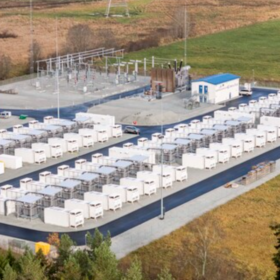
Testing fault at 100 MW battery disrupts Estonia-Finland power link
During testing at Estonia’s 100 MW Kiisa battery park, both EstLink 1 and EstLink 2 tripped, triggering the most severe disturbance to the regional power grid since desynchronization from the Russian electricity system. As a result, nearly 1 GW of capacity was lost within seconds. The park’s owner has since publicly pointed to the battery manufacturer.
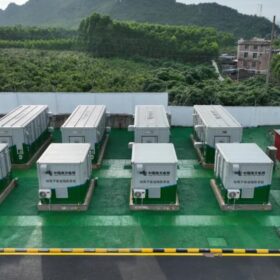
Sodium-ion battery cells already near lithium-ion cost parity, set to get cheaper
By 2050, sodium-ion batteries with fast learning rates could deliver storage at 11–14 €/MWh – cheaper than lithium-ion at 16–22 €/MWh – while also offering higher energy-to-power ratios and high cycle durability, a new research finds.

Calefa Oy releases waste heat-powered steam heat pump
The Finnish company said its novel AmbiSteam system can produce process steam above 5 bar. It is based on the company’s SteamLevel heat pump technology.
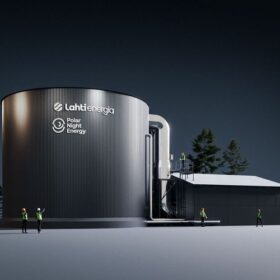
Finland’s Polar Night to build 250 MWh sand battery for district heating provider
Only months after inaugurating the world’s largest sand battery – a 1 MW/100 MWh thermal storage system – Polar Night has committed to building a project twice its size.
