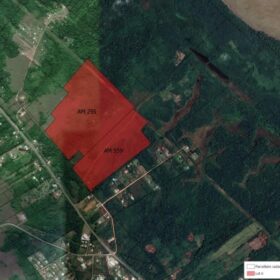
French Guiana tenders public land for solar deployment
The authorities in French Guiana plan to allocate 550 hectares of public land for agrivoltaics and large solar-plus-storage projects.
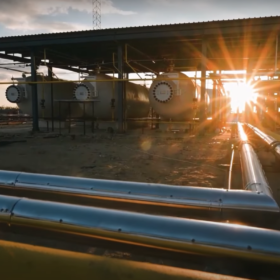
The Hydrogen Stream: LCOH of subsidized green hydrogen under $2/kg
Lazard explains in a new report that the levelized cost of hydrogen (LCOH) is normally lower for green hydrogen than for pink hydrogen, using both PEM and alkaline electrolyzers, with or without subsidies. Meanwhile, Australian authorities are trying to increase the competitiveness of the local hydrogen sector, while car companies are updating their fuel cell plans.

Latest French PV tenders show clear upward price trend
The French authorities selected 16 projects (58 MW) in the third round of rooftop PV tenders, at an average final price of €104 ($114.30)/MWh, up 15% from the September 2022 tender. The authorities selected seven ground-mounted projects, or 115 MW of capacity, at an average price of €82.2/MWh, up 20% from the last tender.
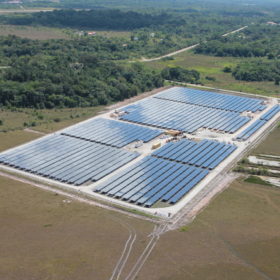
France to offer 2.3 GW of solar in tenders in June
The French government has announced the launch of a tender for 1.5 GW of ground-mounted PV and another tender for 800 MW of rooftop capacity, in order to compensate for the high failure rate of the third round of tenders for large-scale PV plants.
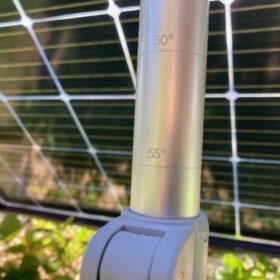
French startup offers ‘manual’ solar tracker for residential PV systems
France-based Luciole & Basilic has developed a tracking system that can be manually oriented according to the zenith every 15 days. The startup recently introduced the first prototype and is now looking for distributors.

What France’s Renewable Energy Acceleration Law means for PPAs
Several lawyers recently spoke to pv magazine France spoke about changes to the French legal framework for renewable-energy power purchase agreements (PPAs).
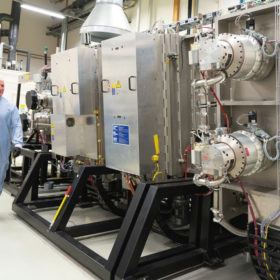
Weekend Read: Industry and researchers in tandem
As efficiency records tumble and devices become more stable, Europe is seeing the beginnings of a race to commercialize high-efficiency perovskite-silicon tandem solar products, reports Valerie Thompson.
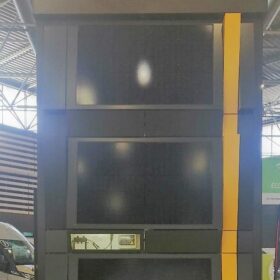
French startup unveils aluminum solar facade
C2F has developed a building-integrated PV (BIPV) facade made of aluminum that purportedly limits the impact of hot and cold weather, while also improving solar module performance.
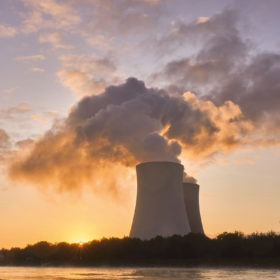
Fortune favors the brave
The renewables industry fears that the new energy bill that the French government is preparing could make clean power generation even tougher. However, solar analyst Xavier Daval says that betting everything on the nation’s nuclear power fleet is a risky strategy.
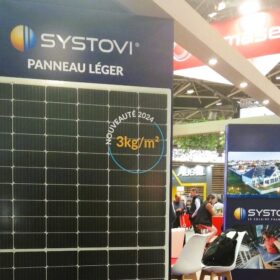
Systovi unveils ultra-lightweight solar panels
French module maker Systovi says its new solar panels weigh just 3 kg/m2. They are designed for flat tertiary rooftops that cannot support the weight of framed solar panels. It will begin selling the new modules in 2024.
