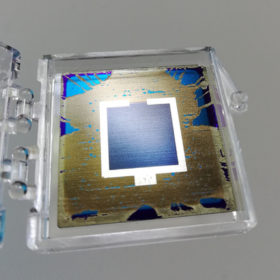
First attempt to build tandem perovskite-PERC/POLO solar cells achieves 21.3% efficiency
The tandem cell was fabricated by German scientists through a process flow that is compatible with industrial, mainstream PERC technologies. According to its creators, the device has the potential to exceed efficiencies of over 29% with adjustments in the perovskite thickness and bandgap.
Sonnenstromfabrik plans 300MW solar module line in Germany with patented REC tech
Under a new partnership, Sonnenstromfabrik is expanding its solar module manufacturing operations in Germany with the addition of a new 300MW line. It will use REC Group’s patented split cell and junction box technology in its new PERC products.

Bifacial TOPCon solar cell with 23.84% efficiency, 90% lower silver consumption
Developed by Germany’s Fraunhofer ISE, the cell is manufactured with metallization based on a plating process. The device was built with galvanic nickel/copper/silver contacts instead of common silver contacts.

More than 190,000 plug-in PV systems are now online in Germany
A recent report from HTW Berlin and Verbraucherzentrale NRW reveals that, between 2020 and 2021 alone, around 128.000 new plug-in solar arrays, totaling 51MW of generation capacity, were installed in Germany.
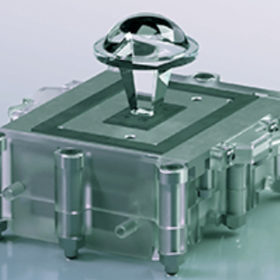
The Hydrogen Stream: CPV-powered PEM electrolyzers for 1.2MW demo in Portugal
Fusion Fuel Green has developed a small PEM electrolyzer that will be used in a green hydrogen project in Iberia. Elsewhere, India’s Adani Group and Canada-based PEM fuel cell producer Ballard Power Systems have signed a memorandum of understanding to evaluate a joint investment in the commercialization of hydrogen fuel cells for mobility and industrial applications in India.

Europe’s first solar-powered electric aircraft charging point
The pilot project is aimed at powering small electric aircraft. It is located in the southeast of England and was developed with 33 modules from Q-Cells.
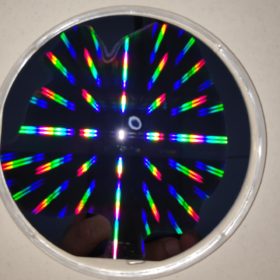
Novel IBC solar cell architecture based on crystal photonics shows efficiency potential of 29.1%
Scientists in Germany designed a poly-Si on oxide (POLO) interdigitated back-contact (IBC) solar cell integrating photon crystals and found this architecture has the potential to reach a power conversion efficiency of over 28%, which would be 1% higher than the current practical limit set by the scientific community. They also found that by improving passivation, the efficiency may be raised up to 29.1%.
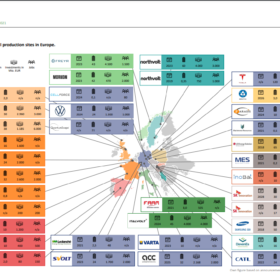
Europe’s gigafactory boom in full swing with another plant announcement
The list of planned gigawatt-scale battery cell manufacturing plants in Europe has grown, with Anglo-Korean battery maker Eurocell announcing plans for a gigafab in Western Europe to start manufacturing at scale within 12 months.

Work begins on world’s second largest PV system on a stadium roof
The stadium of German football club SC Freiburg will host a 2.4MW rooftop solar array that will be built with heterojunction modules provided by Swiss manufacturer Meyer Burger.
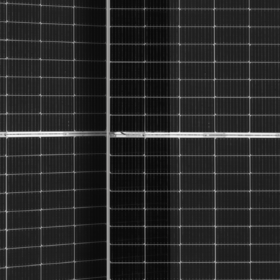
TOPCon vs PERC – a battle between fast learning curves
TOPCon solar modules will gain more market share if their average efficiency, already higher than that of PERC panels, continues to improve, according to Stefan Glunz, PV research chief at Germany’s Fraunhofer Institute for Solar Energy Systems ISE. In an upcoming pv magazine webinar on the potential of TOPCon tech, Glunz will show how to reduce costs and increase efficiency.
