
Mobile laboratory for PV module testing
MBJ Solutions and TÜV Rheinland have jointly developed PV TravelLab, which is purportedly the world’s first portable laboratory for PV module tests. It can be used to assess solar panels at any location in the world.
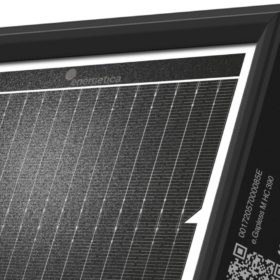
Energetica unveils solar modules with gapless tech
Austrian solar manufacturer Energetica aims to commercialize gapless PV modules by the fourth quarter.
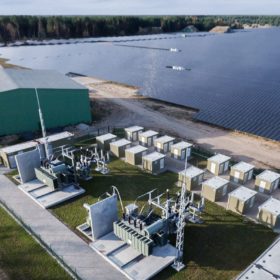
SMA passes billion-euro mark in 2020 sales, expects further growth
Despite the Corona pandemic, SMA Solar was able to significantly improve its financial results over the past year and has met its 2020 forecasts. Overall, the German PV company has installed more than 100 GW of solar inverter power globally.

Aleo Solar announces 400 W module
The German manufacturer will offer the solar module for rooftop PV applications from the third quarter of 2021. Aleo Solar will install a new production line at its factory for the new product.

Nexwafe raises €10 million for commercialization of wafer tech
Wafer manufacturer Nexwafe is currently trying to commercialize its highly efficient monocrystalline wafer technology.
Performance improvements for anomalous photovoltaic effect
A German research team has created a new solar cell architecture with self-assembled, three-dimensional nanocomposite thin film. The special cell configuration purportedly improves electrical output by a factor of five.
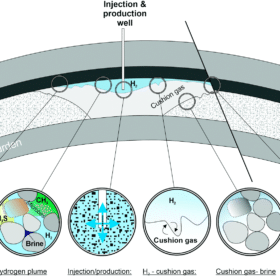
Key challenges for underground hydrogen storage
An international research team has presented challenges and knowledge gaps in the implementation of large scale underground storage of hydrogen. The main issues associated with this technology relate to the fluid flow behavior of hydrogen in subsurface reservoirs, geochemical reactions caused by hydrogen injection, biotic reactions caused by excess hydrogen, and the geomechanical response of the subsurface to hydrogen storage.
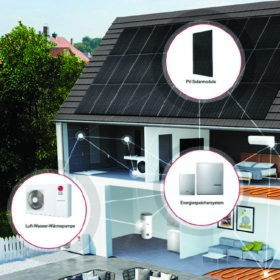
LG Electronics offers hybrid system combining heat pump, PV and storage
The system generates electricity and heat for residential houses and small businesses. An integrated energy management system should guarantee maximum self-consumption of the solar power produced.
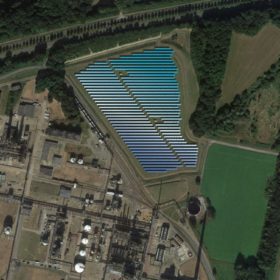
European joint venture wants to deploy 4 GW of PPA-linked solar across UK, Germany and the Netherlands
Ampyr Solar Europe, a new joint venture between Naga Solar, the AGP Group, and Hartree Partners, will develop ground-mounted photovoltaic projects in the three European countries. The solar parks will be financed through power purchase agreements with energy suppliers and businesses.

The Smarter E Europe postponed to July
The organizers of Intersolar and Ees Europe, in Munich, the largest photovoltaic and storage trade fairs in Europe, have decided to postpone the two events by six weeks. They hope that in the second half of the year there will be fewer restrictions and that the summer will have a dampening effect on the coronavirus pandemic.
