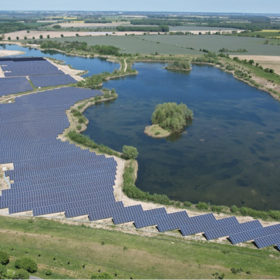
Germany awards 2.23 GW in PV tender, with lowest bid of €0.0362/kWh
The German authorities have granted 2.23 GW in a utility-scale solar tender, with bids ranging from €0.0362 ($0.039)/kWh to €0.0549/kWh, oversubscribed to 4.1 GW.
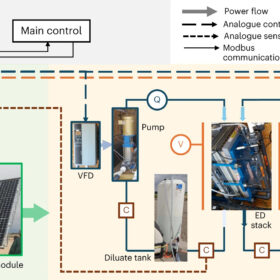
Novel PV-driven desalination tech achieves lower levelized cost of water
Scientists led by the Massachusetts Institute of Technology (MIT) have designed a new PV-powered desalination system based on the time-variant electrodialysis reversal (EDR) technology. The proposed system reportedly achieves lower levelized cost of water than conventional solar-powered desalination techs.
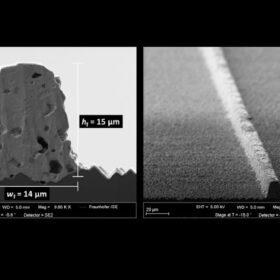
Fraunhofer ISE develops 23.4%-efficient PERC solar cells with limited silver amount
A team from Germany’s Fraunhofer Institute for Solar Energy Systems has reduced silver consumption in the fabrication of PERC solar cells by screen-printing ultra-fine metallization lines measuring just 14 μm. The resulting solar cell offered remarkable efficiency levels, which were confirmed by Fraunhofer ISE CalLab.

The Hydrogen Stream: Norway to make world’s biggest hydrogen ships
Norwegian Ship Design Co. has agreed to help build what it claims will be the two largest hydrogen ships in the world, while Norwegian Hydrogen has announced plans to team up with Australia’s Provaris Energy on hydrogen export opportunities.
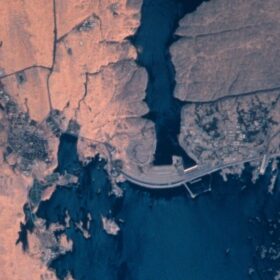
Floating photovoltaics may significantly reduce water evaporation at Aswan dam
The Aswan High Dam Reservoir is one of the world’s largest water reservoir and suffers from high water evaporation rates due to the region’s very hot and dry climate. Floating PV installations may be a remedy, while also offering a good match for hydropower generation.
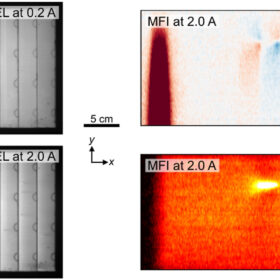
Edge passivation improves shingled solar module performance
A group of scientists from the Germany’s Fraunhofer ISE has proposed a new metric to assess the performance of shingled solar panels. They also applied the so-called passivated edge technology (PET) to experimental shingled modules and found it can increase their pseudo fill factor without compromising their inteconnection quality.
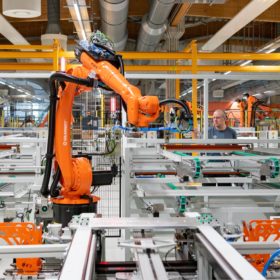
Solarwatt to close German solar module factory in August
The module manufacturing facility is located in Dresden, eastern Germany, and has an annual capacity of 300 MW.

Germany’s new solar additions hit 3.7 GW in Q1
Germany reached 86.2 GW of cumulative installed PV capacity at the end of March 2024.
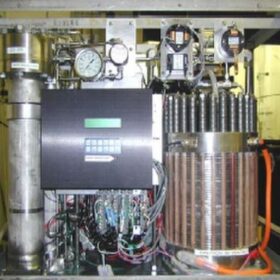
The Hydrogen Stream: 1.2 TW of electrolyzers globally in development
Aurora Energy Research says it has recorded a sharp increase in green hydrogen projects, with 90% of them in early phases of development, while E.ON says that Germany’s hydrogen ramp-up is stuck due to an investment backlog.

Germany launches new measures to support solar
The German parliament has approved “Solarpaket 1,” a policy package that includes higher feed-in tariffs for commercial and industrial (C&I) solar projects and new measures related to the size of eligible installations in large-scale solar auctions.
