
Solar could supply half of India’s clean energy aims
U.S.-based researchers have modeled the costs of achieving 200 GW, 400 GW and 600 GW of renewable-energy capacity in India within this decade. They said PV should account for no more than half of all generating capacity and have urged policymakers to shift their focus to wind power.
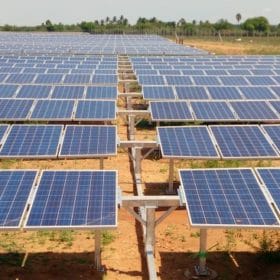
India’s cumulative PV capacity hits 39.1 GW
India had 39.1 GW of grid-connected solar and 216 MW of off-grid projects in operation by the end of February. The state of Karnataka leads with 7.4 GW of installed solar capacity, followed by Rajasthan with 5.5 GW and Tamil Nadu with 4.4 GW.
Can you design sustainable PV backsheets without compromising performance?
While the quality of materials and components has thus far been a particular focus for manufacturers looking to offer premium products that stand the test of time, sustainability is increasingly on the agenda as end-of-life waste mounts, and customer and policy demands change. A growing number of manufacturers recognize the benefits of integrating sustainable design and production principles, like lower long-term costs, due to material reuse, for example, without compromising on other aspects.

Spanish solar renaissance lifts world to record year for large scale projects
A global ranking of large scale solar project capacities indicates prominent roles for a resurgent Spain, behind the usual top three of China, the U.S. and India, with Australia and the Netherlands also on the rise. There were disappointing returns, though, for the U.K., Italy and Canada.
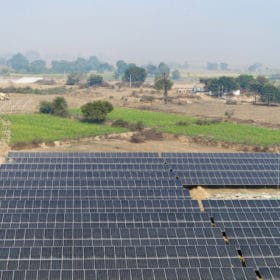
Indian state of Uttar Pradesh tenders 75 MW grid-connected solar capacity
Global bids are invited to develop an aggregate 75 MW of grid-connected solar power projects with an upper tariff ceiling fixed at INR 3.00/kWh ($0.041/kWh) for the entire power purchase duration of 25 years. The projects are to be installed in the Uttar Pradesh Solar Park on a build-own-operate basis.
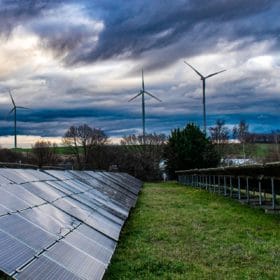
India’s $122bn energy stimulus spending may benefit fossil fuels most
A report says India’s energy investment commitments over the last 14 months largely feature measures for power transmission and distribution that could benefit greenhouse-gas-producing fuels more than renewables.
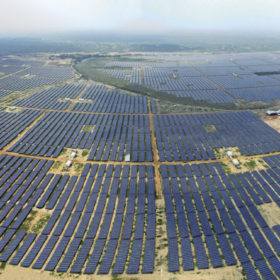
Adani Green Energy raises US$1.35 billion in debt funding
The Indian developer has secured the revolving fund from 12 international banks. It will use the amount to initially finance its 1.69 GW hybrid portfolio of solar and wind projects to be set up in the Indian state of Rajasthan.
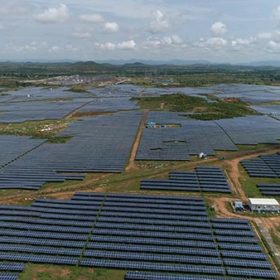
Indian customs duty could drive up solar costs by 20%
PV installation costs in India are set to increase when a 40% customs duty goes into effect for solar modules from next year, along with a 25% duty on cells.
Why bigger is better when bifacial modules meet single-axis tracking in the APAC region
Australia’s large-scale solar segment has adopted the combination of bifacial modules with single-axis tracking – delivering on LCOE and power output during the times of the day when wholesale prices are high. With large-format modules now coming on the market, will the wider Asia-Pacific region follow suit?

India’s largest floating PV plant to go online by June
NTPC is now building a 100 MW floating solar array on a reservoir in the Indian state of Telangana.
