Indian businesses can assess energy transition readiness with new tool
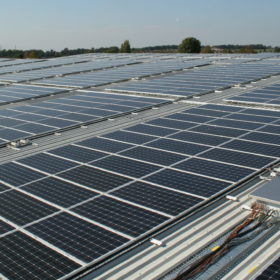
The Portal for Renewable Energy Action Assessment Metrics is an online rating system which enables businesses to assess their renewable energy consumption.

India could have 20 GW more PV manufacturing capacity
Indian Minister of Power RK Singh has revealed interest from manufacturers in developing more production lines, even before newly planned incentive schemes are taken into account.

India’s wind-solar hybrid capacity may reach 11.6 GW by 2023
According to a new report by the Institute for Energy Economics and Financial Analysis (Ieefa) and JMK Research, the Solar Energy Corporation of India (SECI) has so far tendered a total of 12,860 MW hybrid capacity.

Indian solar tenders to incentivize advanced local manufacturing
Policymakers could amend solar auctions to encourage manufacturing as the nation chases an aggressive solar target of 300 GW by 2030.

Renewsys announces giga-scale expansion of solar encapsulant and backsheet manufacturing in India
The solar manufacturer will expand its annual encapsulant manufacturing capacity by 1.35 GW and backsheet production by 1 GW.

India tenders for Himalayan off-grid solar and storage
The Solar Energy Corporation of India has issued a call for expressions of interest to supply clean energy to isolated off-grid communities and warned components will probably have to be transported manually.

Total-EDF secure 1.35 GW of Indian solar in four months
The generation capacity – three 450 MWp projects in the state of Rajasthan – is expected to be commissioned towards early 2022.
The bigger the module, the bigger the ROI? Let’s crunch the numbers!
Is bigger always better? Had this year not already been dubbed the year of Covid-19, the solar industry might have remembered 2020 as the super-high-power modules year. In this pv magazine Webinar, we will discuss how EPCs and developers can maximize output and return on investment for their next project using these latest generation modules.

IRENA presents $2tn plan to drive 5.5m renewables jobs by 2023
Doubling down on renewable energy investment and energy transition spending is required to ensure a truly green global recovery from the Covid-19 crisis and its economic aftershock, claims the International Renewable Energy Agency.

Indian state tenders 500 MW of solar
Projects can be established anywhere in Gujarat which has spare grid capacity, with the relevant substations listed on the Gujarat Energy Transmission Corporation website.
