
India ranked the world’s most attractive PV market by Ernst & Young
The latest edition of the accountant’s renewables attractiveness index has placed the nation in top spot for photovoltaics, helping it to fourth spot for overall clean energy investment. Mexico has been hammered by the government’s attitude to clean power and France has also slipped, four places.
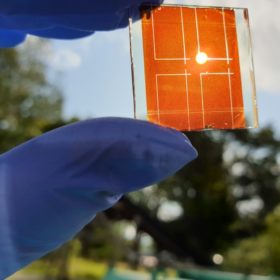
India and Israel to work together on perovskite solar cells and lithium sulfur batteries
Low-cost batteries and novel perovskite materials are among the topics selected for joint research and development.
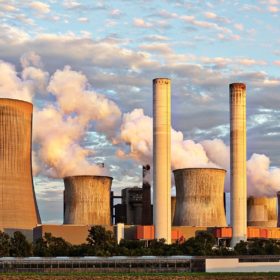
‘China renewables will hit grid parity with new-build coal next year’
Analyst WoodMac says South Korea, Thailand and Vietnam will also join India and Australia next year, among the nations where clean energy projects are cheaper than new coal power plants.

India secures record-low solar tariff of $0.027/kWh
Solar Energy Corp. of India secured a bid of $0.027/kWh in a recent auction, which is 15% lower than Solarpack’s INR 2.36/kWh winning bid in a previous 2 GW procurement exercise.

Trends in solar modules – Interview with RenewSys CEO
Avinash Hiranandani, global chief executive officer and managing director of RenewSys India, speaks to pv magazine about solar module technology trends and the company’s manufacturing focus.

India added 438 MW of solar capacity in Q3 2020
The new solar capacity added during the three months ending September includes 283 MW from large-scale installations and 155 MW rooftop.
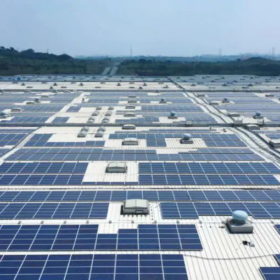
India deployed 400 MW of rooftop PV in Q2
India added 399 MW of new rooftop solar capacity in the second quarter (July-Sept) of fiscal 2020-21. By comparison, just 188 MW was installed in the corresponding period last year.
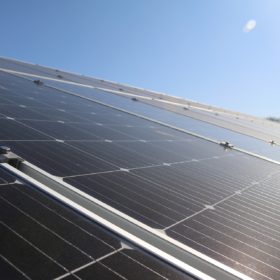
Solar microgrid powers Indian health center
The Indian Institute of Science (IISc) Bangalore has installed a 5.2 kW solar system linked to 150 Ah of lead-acid battery storage in a project supported by the Sunrise program led by Swansea University, in Wales.
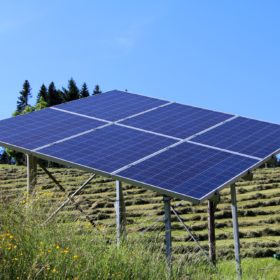
The best renewables combination for off-grid power supply
Scientists in India have proposed a model to design an off-grid, hybrid energy system based on a combination of solar, wind, biomass, biogas and fuel cell, linked to storage, for electrifying a cluster of three village hamlets in the Indian state of Karnataka. The model is implemented through the HOMER software and a genetic algorithm.

India announces $3bn package to attract solar module and advanced battery manufacturers
An ambitious, $19.5 billion, five-year expansion of a previous domestic industry spending program includes money to attract investment into the sustainable energy and transport technologies.
