Investigating smoke dispersion in rooftop PV fires
Researchers have conducted a small-scale experiment on the behavior of smoke in PV-related fires. They have found that in homes featuring rooftops with a pitch of less than 45 degrees, residents only have about four minutes to safely evacuate.
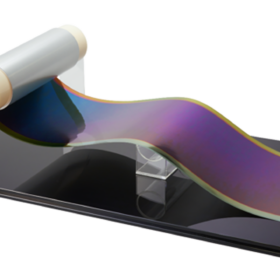
Sekisui Chemical to open solar module factory in Slovakia
Denisa Sakova, Slovakia’s Deputy Prime Minister and Minster of Economy, has signed an agreement with Japanese plastics manufacturer Sekisui Chemical, which is developing flexible photovoltaic panels. Sakova says the aim is to explore the possibility of producing the panels in Slovakia.
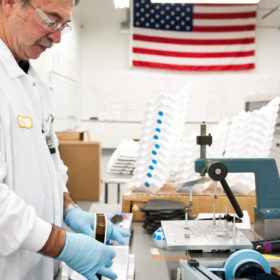
The Hydrogen Stream: US funding 16 geologic hydrogen exploration projects
The US Department of Energy (DoE) has announced plans to invest $20 million in 16 projects across eight states to accelerate the exploration of geologic hydrogen.
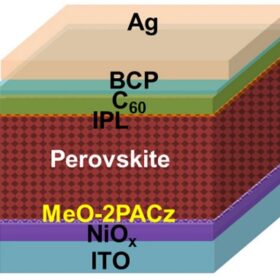
Methylammonium-free inverted perovskite solar cell achieves 23.17% efficiency
Scientists in Japan have fabricated an inverted pervoskite cell with a new bond/charge regulated defect passivation technique consisting of introducing bifunctional molecules onto the perovskite absorber. The device exhibited a low open circuit voltage deficit and remarkable stability.
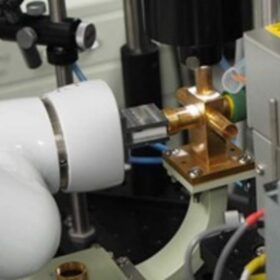
Robotic measurement system assesses new materials for solar cells
Researchers in Japan have developed an automated system to perform photoabsorption and photoluminescence spectroscopy, optical microscopy, and white-light flash time-resolved microwave conductivity tests.
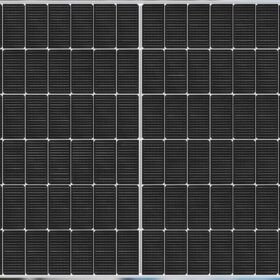
Sharp unveils 580 W TOPCon solar panel with 22.45% efficiency
Sharp’s new IEC61215- and IEC61730-certified solar panels have an operating temperature coefficient of -0.30% per C and a bifaciality factor of over 80%.

Japan PPA market now includes solar carports
Sumitomo and Shikoku Electric have agreed to sell solar power to Japanese retailer Aeon Mall under a power purchase agreement (PPA). Around 15 MW of solar carports are now being developed to supply the electricity.
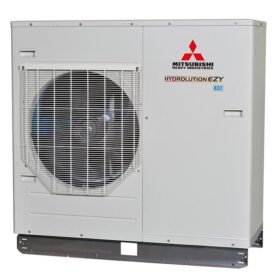
Mitsubishi debuts residential air-to-water heat pumps
Mitsubishi’s monobloc Hydrolution EZY can reportedly produce domestic hot water up to 60 C when outdoor temperatures reach -25 C. It is available in two versions, with outputs of 10 kW and 14 kW.
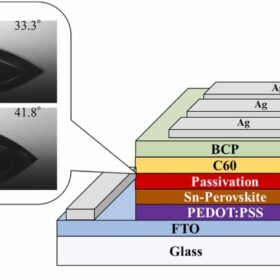
New passivation strategy paves the way for lead-free perovskite-silicon tandem solar cells
Scientists in Japan have developed a lead-free tin sulfide solar cell that is intended for applications in tandem perovskite-silicon PV devices. Through a new passivation technique based on the use of phenylsilane (PhSiH3) as a reducing agent, they were able to considerably increase the cell efficiency compared to a reference device with no PhSiH3 treatment.
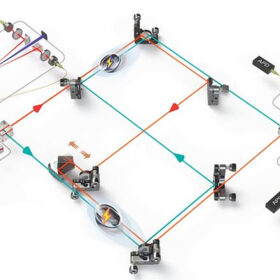
Charging quantum batteries
Researchers in Japan have taken advantage of an unintuitive quantum process that disregards the conventional notion of causality to improve the performance of so-called “quantum batteries.” They believe these advances could help to bring the technology a little closer to reality.
