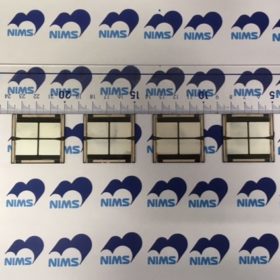
Methylammonium-free perovskite solar cell with 22.29% efficiency
Japanese scientists have built a perovskite solar cell without methylammonium to improve the device’s thermal stability. The cell showed better efficiency and stability under standard testing conditions.

The Hydrogen Stream: Hy24 closes world’s largest clean hydrogen infrastructure fund
The Clean H2 Infra Fund has closed with new investors to mobilize up to €20 billion ($19.4 billion) of investment capacity over the next six years for heavy mobility and energy-intensive industries. Toshiba has revealed new production tech for electrolysis electrodes that slashes iridium use, while Hyundai Heavy Industries has kicked off a demo project for fuel cell vessels.
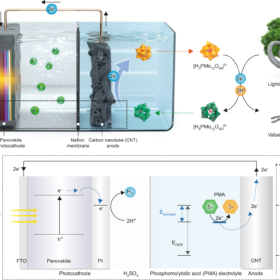
The Hydrogen Stream: South Korean scientists achieve photocurrent density of 19.8 mA cm−2 in PEC cell for water splitting
Ulsan National Institute of Science and Technology researchers have unveiled designs for advanced solar hydrogen production systems to broaden the application of LC biomass. Mitsubishi has started building the world’s first validation center for hydrogen-related technologies, while Fortescue Future Industries has announced investments in Germany and Australia.

The Hydrogen Stream: Biotech startup targets hydrogen production from depleted wells at $1/kg
Cemvita claims it can produce hydrogen at the “lowest possible cost,” Deutsche Bahn and Fortescue Future Industries have announced plans to jointly modify diesel engines for locomotives, and the Canadian province of Alberta has started promoting its hydrogen potential in Japan.
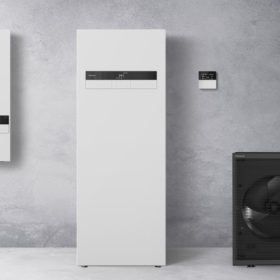
Panasonic brings air-to-water heat pumps to Europe
Panasonic’s new heat pump can supply domestic hot water, heating and cooling from a single, integrated unit. It can also synchronize with the Japanese company’s PV panels and its CZ-NS4P technology printed circuit board technology, while also ensuring smart-grid compatibility.
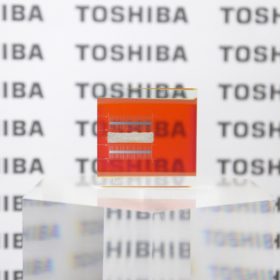
Toshiba raises efficiency of transparent cuprous oxide solar cell from 8.4% to 9.5%
Toshiba has revealed that it has improved the power conversion efficiency of a transparent cuprous oxide solar cell to 9.5%, from the 8.4% mark it reached in December 2021. It enlarged the cell and suppressed carrier recombination at the edge of the cuprous oxide (Cu2O) generation layer, which usually causes generation efficiency degradation.

Panasonic presents 22.2% efficient all-black heterojunction solar module compatible with its Evervolt battery
The new module series has a power output ranging from 420 to 430 W, a temperature coefficient of -0.26% per degree Celsius, and an efficiency of up to 22.2%.

Japan’s 13th solar auction concludes with lowest bid of $0.066/kWh
Japan’s latest procurement exercise was open to PV projects above 250 kW in size. The lowest price came in at JPY 9.7 ($0.066)/kWh and the allocated capacity was just 26.2 MW, out of 225 MW tendered.

PV-driven rechargeable control module for ‘cyborg cockroaches’
Japanese researchers have built ultra-soft PV devices and ultra-thin electronics that can be placed on the curved abdomens of cockroaches without affecting their mobility. The system can be used to monitor hazardous areas, or for urban search-and-rescue operations.
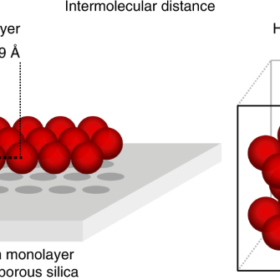
The Hydrogen Stream: Condensed hydrogen on smooth surfaces can sharply exceed liquid hydrogen density
A German-US research team has shown that hydrogen condenses on smooth surfaces at a very low temperature, forming a super-dense monolayer that reduces the volume to just 5 liters per kilogram of H2. Dutch researchers, meanwhile, have published a new study on hydrogen storage in porous rocks, and Itochu said it is moving forward with hydrogen plans in Japan and South Africa.
