PV Market Alliance expects 120 GW of new solar capacity in 2019
The global market stagnated last year, with around 98 GW deployed. For 2019, the experts expect stronger solar growth, provided there are no setbacks in China.
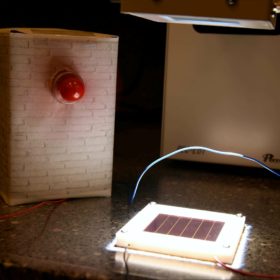
It’s all in the electrons – Japanese scientists give perovskites a push
Scientists at the Okinawa Institute of Science and Technology have developed a process for the creation of perovskite cells with better than 20% efficiency. The cells use a tin-oxide electron transport layer, which the scientists say can triple their operational lifetime.

Toyota and Panasonic to form EV battery joint venture
The deal foresees 3,500 employees from both companies joining the unit, as well as equipment and production facilities to be used to improve battery technologies and develop next-generation solutions.
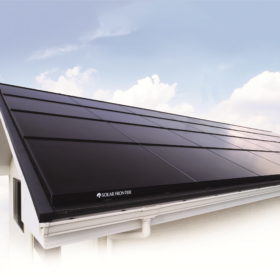
Solar Frontier hits new CIS cell efficiency record
The Japanese module maker has set a new record for CIS thin film cell efficiency. The company, with Japan’s New Energy and Industrial Technology Development Organization, achieved 23.35% conversion on a cell measuring 1 cm². The record was confirmed by the Japanese National Institute of Advanced Industrial Science and Technology.
TrendForce forecasts 111 GW of new solar this year
The Taiwanese market research company said the effects of the 5/31 policy shift in China were less severe than expected, and in 2018 the global solar market grew 4.9%, with approximately 103 GW of new additions. This year, the solar demand is forecast to rise another 7.7%.
New products contribute to another record year for sustainable finance
BloombergNEF figures show financial vehicles linked to environmental and/or social benefits amounted to $247bn worldwide in 2018. The US led the way, almost entirely because state-backed mortgage provider Fannie Mae issued $19.8bn worth of green home loans.
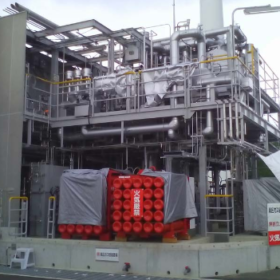
Ammonia in the mix for future storage technologies
Japan’s JGC Corporation reports an efficient method of converting hydrogen to ammonia, which can later be combusted to generate carbon-free electricity. Ammonia, according to JGC, has various advantages over hydrogen in terms of safety and cost effectiveness.
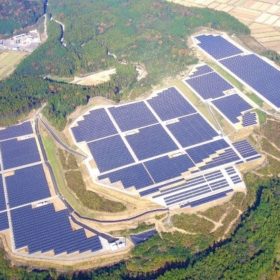
Japan postpones FIT cuts by six months for projects over 2 MW
A reduction of the feed-in tariff to ¥21/kWh (around US$0.19) for projects over 2 MW in size and approved between 2012 and 2014 will be applied starting from September 2019 and not from March, as originally planned. For approved projects with a capacity of less than 2 MW, however, no postponement has been granted.

Japan plans abrupt FIT cut for delayed PV projects
The subsidy for solar schemes approved between 2012 and 2014, and that will be not completed by March, may be reduced to ¥21/kWh. The proposal is expected to affect projects with a combined capacity of more than 20 GW.
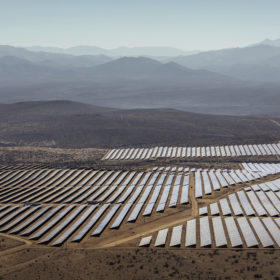
RE100 report showcases the role for corporate action in energy transition efforts
The RE100 Progress Insights Annual Report 2018, released at the end of last week, portrays the central role corporate policies can play in carbon mitigation efforts.
