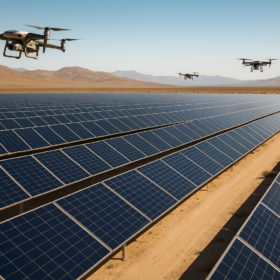
New technique to geo-label PV modules in utility-scale solar parks
Scientists in Morocco have developed a method that uses the metadata of PV plants’ infrared images to label them geographically. The automatic database can then be used in deep learning models and significantly reduce the time required for data labeling.
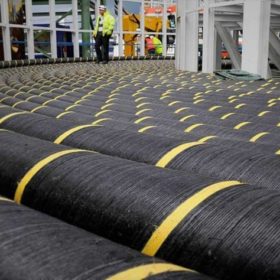
UK rejects CfD bid for 10.5 GW Morocco solar-wind subsea cable
The UK government has rejected a contract-for-difference (CfD) application for the proposed Xlinks interconnector, a 3,800 km submarine cable to deliver power from a planned 10.5 GW solar-wind facility in Morocco to the UK grid.
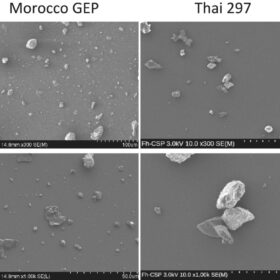
Different dust, different impact on PV module performance
Scientists in Germany have collected dust from Qatar, Morocco and Thailand to analyze the impact on the performance of uncoated solar glass and uncoated PV mini-modules. Their analysis has shown that dust coverage could range from 4% to 60%.

Novel MPPT technique uses fuzzy logic control with new inputs
Academics have developed a maximum power point tracking (MPPT) algorithm for PV systems that combines incremental conductance with fuzzy logic control. The inputs used are the sum of conductance and incremental conductance and its rate of change. It had an average efficiency of 97.7%.
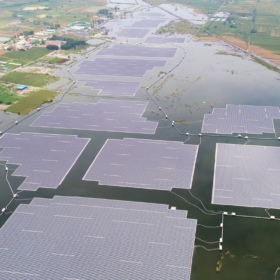
Water-based photovoltaics reach global capacity of 21.18 GW
An international research team has developed an index-based remote sensing method to see trends in the global development of water-based PV. It has found that China currently accounts for 80% of the global total deployed capacity.
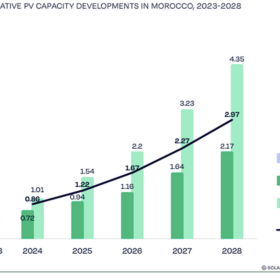
Morocco could hit almost 3 GW of solar by 2028, says SolarPower Europe
Morocco could reach 2.97 GW of solar capacity by 2028 under a medium-case scenario, with potential to hit 4.35 GW in a high-growth outlook, according to a new report by SolarPower Europe.
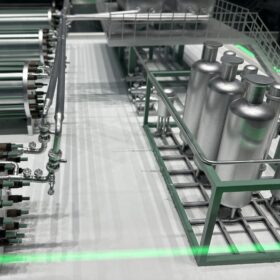
The Hydrogen Stream: Morocco approves $32.5 billion of green hydrogen projects
The Moroccan government has approved six projects by a range of foreign companies, while the European Hydrogen Bank’s second auction for renewable hydrogen production has attracted 61 bids from projects in 11 countries.

The Hydrogen Stream: China not to dominate the electrolyzer supply chains, says Oies
The Oxford Institute for Energy Studies (OIES) says China’s efforts to cut electrolyzer costs could follow its success in solar, but will not guarantee dominance in global supply chains.

The Hydrogen Stream: 41 hydrogen projects to start in Africa by 2029
The Energy Industries Council (EIC) says 41 hydrogen projects are set to begin development across Africa in the next five years, led by North African nations like Egypt, Algeria, and Morocco.
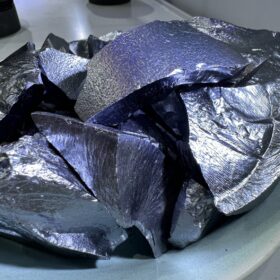
GCL cuts granular silicon production costs by 15%
GCL Technology cut granular silicon production costs by 15% to CNY 28.17 ($3.87)/kg in the fourth quarter of 2024, down from CNY 33.18 in the previous quarter.
