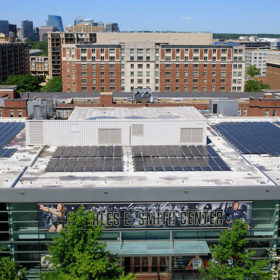
Innovative community solar in the United States
A 497 kW project on five roofs at George Washington University in Washington, D.C., uses SREC sales to provide $1.50 in community benefits for every dollar of power generated. Call it community solar-plus.
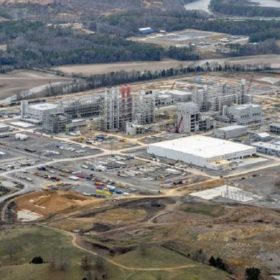
Four injured in ‘incident’ at Wacker’s US polysilicon factory
The German chemicals producer said that the issue involved four contractors doing maintenance on non-operational equipment.
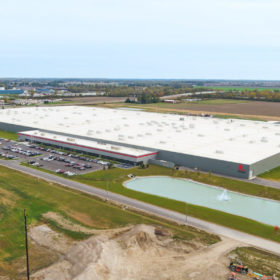
First Solar posts strong Q2, sells O&M unit to NovaSource
Another stalwart of the solar industry was able to take the necessary precautions in order to maintain a sense of normalcy during the pandemic, leading to a quarter of increased sales, net cash, and a positive outlook to finish off the year.
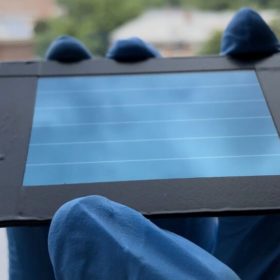
‘Spontaneous de-doping’ for 17.8%-efficient perovskite mini-module
U.S. scientists have found a new ‘de-doping’ process in perovskite solar cells that could cut production costs and produce better devices. They have used this to fabricate a mini-module with 17.8% efficiency.
SunPower survived shutdowns to post strong Q2
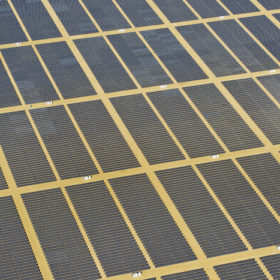
Supply chain and manufacturing disruptions will lead to shipping decreases in the third quarter, but SunPower’s pre-pandemic measures ensured strong performance, solid demand, and higher installations.

Covid-19 weekly round-up: Updates shed light on tough second quarter for solar industry firms
But Israeli inverter company Solaredge and Indian engineering, procurement and construction services provider Sterling and Wilson have both offered hope of a recovery in Europe as Chinese glass producer Xinyi said it kept the furnaces going throughout the worst of the pandemic.

The PV world ten years ago – summer series part I
pv magazine editor Pilar Sánchez Molina recollects everyday news from the PV sector of ten years ago as part of a new series. The insights offered will not only bring back memories for the pioneers of that exciting, challenging period but may also offer an idea of where we could be in 2030.
Looking to phosphorous for next-gen batteries
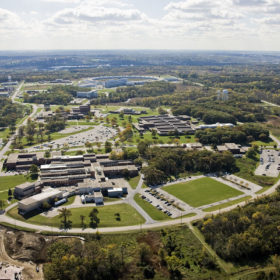
Scientists in the United States have fabricated a working lithium-ion battery using a phosphorous-based anode. The batteries show significantly higher capacity than today’s lithium-ion tech, and could serve as a guideline for future design of high-performance anodes for Li-ion batteries.
Enphase Q2 micro-inverter revenue falls despite demand ‘rebound’
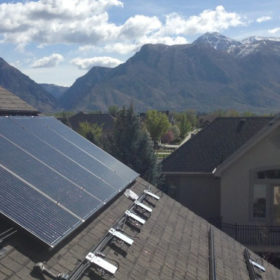
Coming off a strong, profitable first quarter, Enphase sees the second-quarter results of Covid-19 in compressed revenue and a swing to a loss. Gross margins remain strong.

REC Silicon sells off last remnants of Moses Lake polysilicon
The Norwegian company mothballed its Washington State facility more than a year ago and is now reliant on semiconductor-grade poly and silane gas produced at its fab in Butte, Montana – a facility for which the business says it has received plenty of interest from potential purchasers.
