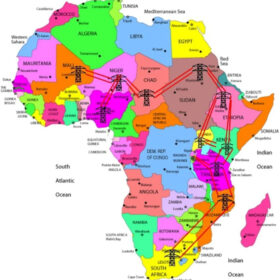
Transnational grid across Sub-Sahara Africa may help spur renewables deployment
An international research group has proposed to build a Sub-Sahara Africa (SSA) central grid across 12 countries in order to reduce energy poverty. The proposed transmission line would touch Mali, Niger, Nigeria, Chad, Sudan, Ethiopia, Uganda, Kenya, Tanzania, Burundi, Mozambique, and South Africa.
Achieving lower LCOS with liquid cooled ESS
In this pv magazine Webinar, we will hear about the utility-scale battery energy storage system (BESS) market trends and investigate how Jinko Solar’s liquid cooled ESS can help achieve a lower levelized cost of storage (LCOS) for utility-scale applications.
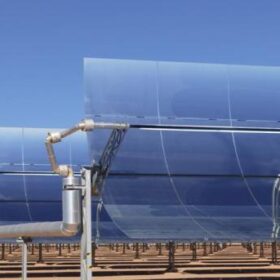
Morocco unveils selected bidders for 400 MW solar tender
The Moroccan authorities are tendering a solar complex that combines 400 MWp of PV and two hours of storage.
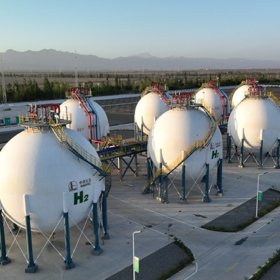
The Hydrogen Stream: China starts world’s biggest solar-to-hydrogen site
China’s Sinopec has switched on the world’s largest solar-to-hydrogen project in Xinjiang, while India has unveiled a new plan to incentivize green hydrogen and electrolyzer production.
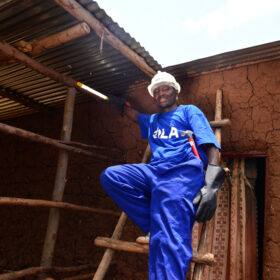
Technology brings universal access to clean energy within sight
The opportunities available from the aggregation and interpretation of mass data are huge and could help attract investors and ensure more efficient electricity networks as the world races to try and achieve the UN goal of access to reliable energy for all this decade.

Key takeaways from Africa Energy Forum
The 25th edition of the Africa Energy Forum in Nairobi, Kenya, drew participants from across Africa and the world. pv magazine was on the ground at the trade show to speak with the attendees.
The Hydrogen Stream: Northern Europe can produce green hydrogen
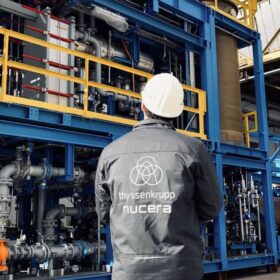
Finnish researchers have said in a new report that northern European countries could produce cheap hydrogen domestically, while TotalEnergies, Schneider Electric and other companies signed new hydrogen project deals.
TOPCon : dominant plus que jamais
Lors de ce pv magazine Webinar réunissant Mejdi Khayati, Responsable Technique pour JinkoSolar MENA, et Nicolas Chouleur, partenaire au cabinet de conseil Everoze, nous aborderons tout le potentiel de la technologie de cellules photovoltaïques TOPCon pour les producteurs et les développeurs de projets, ainsi que les perspectives de croissance du marché.

Effect of wind on solar panel cooling in desert areas
Researchers in Morocco have carried out an experimental investigation which has confirmed that even in hot desert climates, the wind has a positive effect on reducing the PV module temperature, improving the electrical production as well as the conversion efficiency.
Autarky today: how the desire for self-sufficiency can be realized in homes and businesses
In this pv magazine Webinar, we will discover more about how autarky can be achieved in residential and commercial applications, and its benefits. New energy management and storage solutions are coming onto the market that allow businesses and homes to achieve autarky – essentially providing an off-grid system for grid-tied premises.
