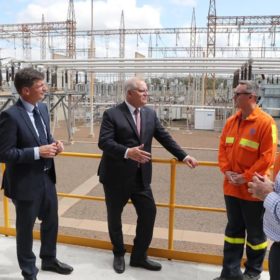
Australian government reduces support for solar, wind
The Australian government has announced new long-term funding and an expanded remit for the Australian Renewable Energy Agency beyond 2022. The funding package, which looks more like a cut than anything else, pushes investment away from solar and wind toward technologies like carbon capture and storage.
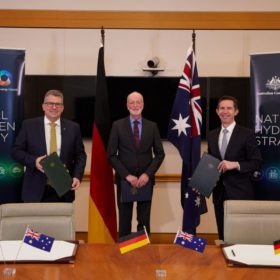
Australia and Germany shake hands on green hydrogen future
The two nations have brought their national hydrogen strategies together after signing a new agreement for a joint feasibility study into green hydrogen production and trade. The agreement was welcomed around the country as auspicious of Australia’s potential as a global green hydrogen superpower.
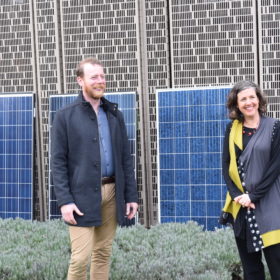
Keeping PV panels honest
Michelle McCann and Lawrence McIntosh, the partners behind the PV Lab panel-testing facility in Canberra, see Australia’s solar installations as a vast, aggregated virtual power plant.
Covid-19 weekly round-up: Australian states target green recovery as France devotes €30bn to energy transition
Clean energy power plants will figure prominently as Queensland and Victoria bid to reset their economies for a post-coronavirus world. France suffered a hit to its new solar deployment figures in the first half of a Covid-hit year but its neighbor appears to have no such concerns.

Australian green hydrogen project secures approval
Green Hydrogen Australia Group has secured approval for three large-scale green hydrogen plants in its pipeline. The Bundaberg Hydrogen Hub, featuring an 80 MW hydrogen electrolyzer, will produce clean hydrogen for vehicle-developer H2X.
Heating up the heterojunction-LID discussion
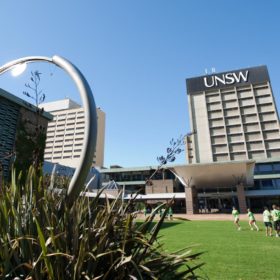
Scientists led by the University of New South Wales have looked into the long-term degradation of silicon-heterojunction. Their findings suggest that illumination at high temperatures could actually improve cell efficiency, but also risks activating multiple light-induced degradation mechanisms if not carefully controlled.
Neoen secures PPA for part of Australian wind-solar-storage project
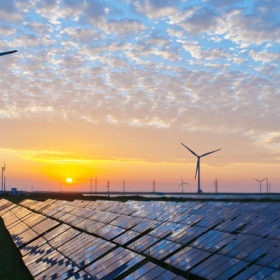
The Australian Capital Territory (ACT) has awarded a power purchase agreement in its fifth renewables reverse auction. The deal relates to a portion of a project consisting of 1.2 GW of wind, 600 MW of solar, and 900 MW/1,800 MWh of battery storage.
The people, the PV and the pipelines that could make hydrogen work
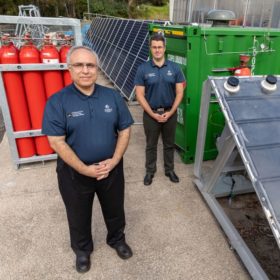
At Australia’s University of Newcastle hydrogen production starts with water extracted from the atmosphere and electrolysis powered by free energy from the sun; sucking CO2 from the air is the next step to filling Angus Taylor’s beloved gas infrastructure with green methane that can bring spuds to the boil and power the economy while helping to flatten the nation’s emissions curve.
Solar-plus-storage for the Cook Islands
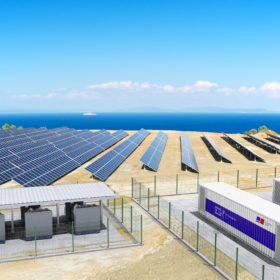
Around 4.2 MWh of energy storage capacity will be connected to a solar and diesel micro-grid on Rarotonga, the largest of the islands in the South Pacific nation. Three 40-foot containers with a total power output of 4.8 MVA will be used as a power reserve and for grid support by utility Te Aponga Uira.
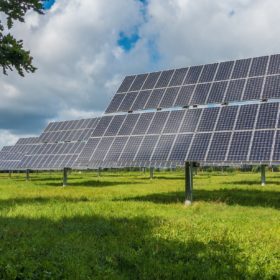
Australia’s first large-scale solar garden
Almost one-third of Australians are locked behind the solar barrier, as they don’t have the luxury of installing their own solar PV.
