
Novel MPPT method combines APO, model-predictive control
An international research team has tested a hybrid control technique combining adapted perturb and observe (APO) with model-predictive control to address complex partial shading in solar arrays. The method, validated through simulation and physical experiments, reportedly outperforms existing approaches.

Behavioral factors behind residential PV adoption in China
Researchers have combined the theory of planned behavior, the technology acceptance model, and diffusion of innovations theory to investigate rooftop solar adoption in China. From a 1,200-person survey, they found that subjective norms and social influence from peers and community had a surprisingly more substantial effect than personal attitudes or perceived ease of use.

Pakistan’s largest battery storage project nears operation for cement firm
Lucky Cement’s 22.7 MWh battery is the largest in Pakistan, and the project is now just months away, according to a company executive.
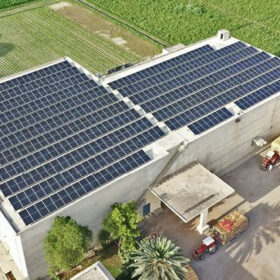
Pakistan proposes 18% tax on foreign panels in wake of solar imports surge
The Pakistan government has proposed an 18% general sales tax on imported solar panels in its budget for the new 2025-26 financial year. Pakistan Solar Association has warned the tax risks slowing solar adoption in the country.

Pakistan’s net-metering capacity hits 5.3 GW
Pakistan’s net-metered solar capacity has hit 5.3 GW, driven by surging rooftop installations and record solar imports from China.

New method to optimize bifacial PV system performance in residential applications
Scientists in Qatar have outlined a new approach to optimize residential bifacial PV systems by combining south-facing and vertically mounted east-facing configurations. The novel methodology reportedly results in a 21.6% increase in a system’s net present value.

Pakistan’s net-metering solar capacity hits 4 GW
Pakistan’s net-metering solar capacity surpassed 4 GW in 2024, marking significant growth in its solar market ahead of upcoming changes to the program later this month.

‘The Solar Blitz’: How crisis-ridden Pakistan is leading the world on the ‘Solar March’
Karl-Heinz Remmers examines Pakistan’s startling growth in solar energy use, which could serve as an inspiration not only for developing countries but also for Germany and the EU.
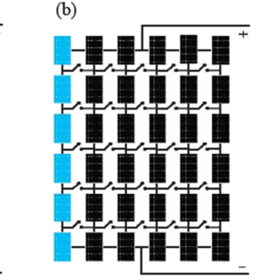
Fuzzy reconfiguration scheme to reduce power losses in PV systems under fault conditions
Scientists in Pakistan have developed a fuzzy reconfiguration method that can reportedly mitigate power losses due to shading and hotspot faults by up to 23.5% compared to conventional techniques. The proposed scheme is said to be suitable for both square and rectangular PV arrays of different sizes.

Scientist develops machine-learning method to identify faulty solar panels
A scientist in Sweden has developed a new hybrid local features-based method using thermographs to identify faulty solar panels.
