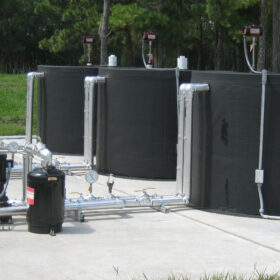
Compression-assisted adsorption thermal battery prototype for seasonal heat storage
Chinese researchers have developed a thermal battery prototype using composite sorbents and have scaled it up via simulation to operate in real world conditions. A compression ratio from 1 to 4 reporteldy boosts average output heat power by 300%.

South Africa targeting up to 5 GW of new renewables per year
The South African Renewable Energy Master Plan (SAREM) aims to deploy at least 3 GW of new renewables per year, increasing to 5 GW by 2030, while creating 25,000 jobs in the country’s renewable energy and storage sectors.

South African province launches agrivoltaics tender
South Africa’s Mpumalanga province is seeking developers to partner with its Department of Agriculture, Rural Development, Land, and Environmental Affairs to establish and operate agrivoltaics at selected sites, with applications due by April 10.

Yellow Door Energy signs PPA for 24.5 MW solar wheeling project in South Africa
The 20-year power purchase agreement (PPA) will see PowerX, South Africa’s first licensed private sector electricity trader, distribute the energy produced to its customers via connection to the national grid.

South African regulator updates solar registration numbers
South Africa’s energy regulator registered 142 solar facilities totaling more than 1.1 GW of capacity in the third quarter of the 2024/25 fiscal year, bringing total registered generation capacity to more than 10.5 GW since 2018.
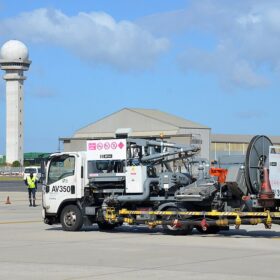
Airports Company South Africa issues tender for three PV plants totaling 9.5 MW
The tender covers the design, supply, installation, commissioning and maintenance of three proposed projects to be based at Tambo International Airport, King Shaka International Airport, and Cape Town International Airport. Closing dates for submission is March 17.
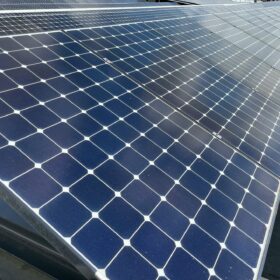
Eskom calls for registration of all grid-tied solar installations
South African utility Eskom is urging consumers with grid-tied rooftop solar to register their systems and integrate them with the national grid, waiving registration fees until March 2026. Off-grid installations must still prove they operate independently.
Load shedding returns to South Africa
The South African Photovoltaic Industry Association (SAPVIA) says that despite the return of load shedding over the weekend, the nation is still on track to permanently eliminate power outages.

UN refugee agency to power most of its offices with PV
The United Nations High Commissioner for Refugees (UNHCR) has revealed plans to install solar systems in 18 offices by 2025, aiming to cut emissions and reduce reliance on diesel.
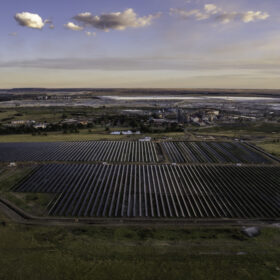
Juwi to build 340 MW of solar in South Africa this year
South Africa’s Juwi Renewable Energies has announced plans to build three large-scale solar plants with a combined capacity of 340 MW that will serve major players in South Africa’s mining, data centre and energy sectors.
