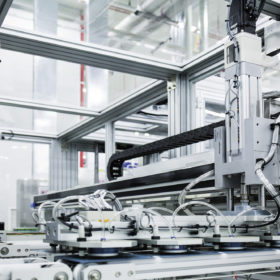
South Korea’s roadmap to drive down solar costs
The government has unveiled a plan to help the PV industry reduce the cost of solar panels from around $0.23/W to $0.10/W by 2030. The plan also aims to reach module efficiencies of around 24% – up to 35% for multi-junction cells – by the end of the next decade.
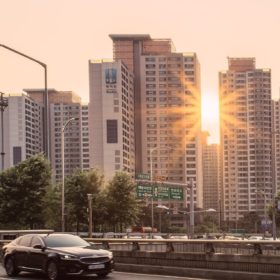
Seoul launches 1 GW rooftop solar plan
The South Korean capital has unveiled a plan to deploy rooftop PV on a million homes and all public buildings. The new initiative is designed to bring the city’s cumulative installed solar capacity to around 1 GW by the end of 2022.
Hanwha vows ‘immediate appeal‘ in event of ITC summary decision
With the Q Cells solar business warning it is preparing an instant appeal if a U.S. ITC judge rules against it Stateside, the chemical company parent announced its solar panel business saw a year-on-year, third quarter rise in revenue from KRW818 billion to KRW1,638 billion.

Mirova raises €857m in Eurofideme 4 funding round for renewables
The investment manager is now Europe’s largest renewable energy fund. The €1.3 billion group already has a 1.8 GW generation portfolio.

Industry waits in anticipation of a Green Deal for Europe
Amid high hopes for the European Commission presidency that is about to start, attendees at a recent event in Berlin tempered optimism by renewing calls for an industrial policy for the bloc.

South Korea’s 2.1 GW floating solar project overcomes first hurdle
The Korean Ministry of Defense has said the huge project will not interfere with the flight operations of U.S. forces stationed in a base near Saemangeum, an estuarine tidal flat on the coast of the Yellow Sea where the plant would be deployed.
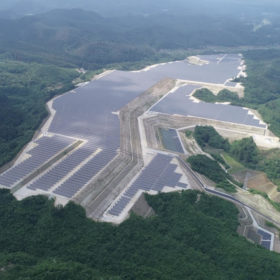
Solar sales recover for electronics brands LG, Kyocera and Panasonic
Korean conglomerate LG reports increasing demand for its high-efficiency PV products in key markets while Kyocera said its solar business is improving profitability. Panasonic posted a slight increase in sales for its PV segment, including solar manufacturing.
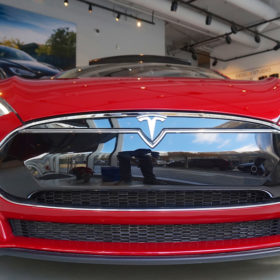
Tesla gigafactory orders see LG Chem supplant BYD as third biggest global battery supplier
The Chinese e-mobility company has been hammered since Beijing’s abrupt reduction of electric vehicle subsidies in the summer. Korean outfit LG Chem’s shipment volumes have gone in the opposite direction.
AC Energy, UPC Solar set up new Asia-Pacific joint venture
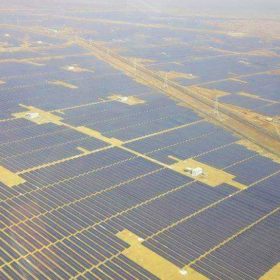
Philippines-based AC Energy will work with UPC Solar Asia Pacific – the solar energy unit of Hong Kong-headquartered UPC Renewables – to build more than 1 GW of solar in the coming years, with an initial focus on Asian markets such as India, South Korea and Taiwan.
New efficiency record for flexible CZTS
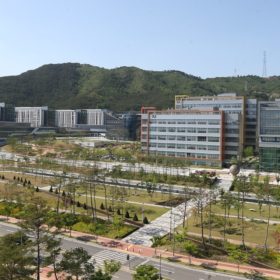
Scientists at South Korea’s Daegu Gyeongbuk Institute of Science and Technology have set a new efficiency record of 11.4% for a cell based on a copper zinc tin sulfide thin film applied to a flexible substrate.
