
Key takeaways from Solar + Storage España
RE+ held the Solar + Storage España event in Barcelona on May 10 and 11, in collaboration with pv magazine. Our team of editors curated and hosted the two-day “Sun of Spain to Lead Europe” conference.

New platform to purchase and sell PV, wind projects in Spain
NTeaser is a new platform that connects developers and investors to sell renewable energy projects and assets without intermediaries.
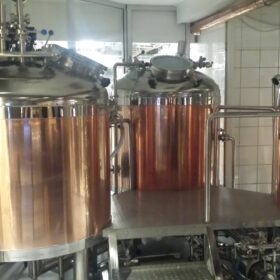
Solar for microbreweries
Spanish researchers have studied the potential of rooftop PV in microbreweries and have found that solar could cut the cost of heating and refrigeration by nearly 30%. They say that coupling PV with small breweries could result in payback times ranging from 4.3 to 6.6 years.

Gran Canaria moves forward with 200 MW pumped hydro project
The authorities on the Spanish island of Gran Canaria have decided to resume work on a 200 MW pumped hydro project after they determined that cavities and canals in a water reservoir are not archeologically significant.
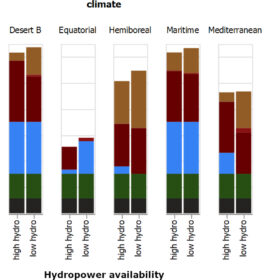
The Hydrogen Stream: Electrolysis is cost-efficient in all climates, says Finnish team
Researchers at the VTT Technical Research Centre of Finland said that chemical energy storages were needed for short and long-term balancing in every climate region, especially in the northern climates. Meanwhile, companies are moving forward with their plans to produce hydrogen in Namibia and Morocco.
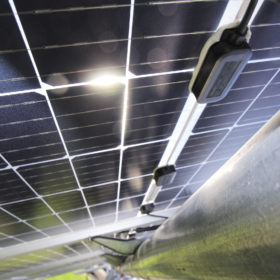
Scientists compare PVsyst, Comsol software in assessments of bifacial PV
Spanish researchers compared two software programs that are used to analyze bifacial PV systems. They found that PVsyst outperformed Comsol in calculating solar production in nearly all cases.
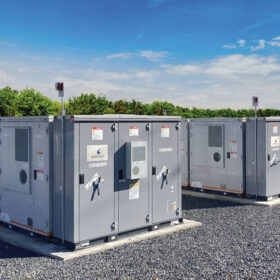
Weekend read: Pathfinders for grid stability
Non-synchronous renewable energy affects grid stability but storage-as-transmission (SAT) assets offer grid companies a trump card. Whether it’s “virtual transmission” in Australia, Germany’s “Grid Booster” program, or the giga-scale pipeline of projects emerging in the United Kingdom, energy storage is finding a way.
The Hydrogen Stream: Chinese companies push for hydrogen transport
CNPC and Sinopec are working on transporting hydrogen via pipelines, while Matrix Renewables has expanded its green hydrogen partnership with Rolwind Renovables.
The Hydrogen Stream: US team produces hydrogen from ocean water
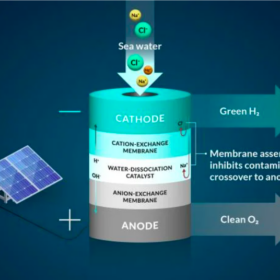
A team of US researchers engineered a double-membrane system to minimize chloride oxidizing the anode. Meanwhile, the Spanish government supports Destinus to develop its hydrogen-powered supersonic plane and test it in 2024.
Iberdrola plans to open 1.6 GW PV module factory in Spain
Spanish energy giant Iberdrola has revealed plans to open a second solar module factory in Spain, following its first announcement in February. The initiative will require European funding to ensure its competitiveness.
