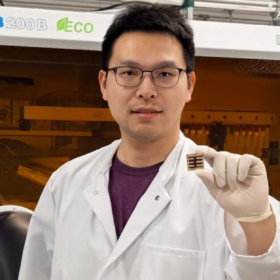
How perovskite solar cells age under temperature stress
German and Swedish researchers have found that rapid temperature cycling degrades perovskite cell performance through thermally induced stress and phase transitions, while also identifying organic spacer molecules that can enhance structural stability.
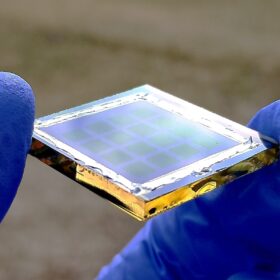
Swedish scientists build bifacial chalcogenide solar cell with 15.1% efficiency
Researchers in Sweden developed a bifacial chalcoprite solar cell using a titanium-doped indium oxide (ITiO) back contact, achieving 68% bifaciality. The device is able to maintain strong front-side performance with around 15% efficiency, 595 mV open-circuit voltage, and 75% fill factor.”
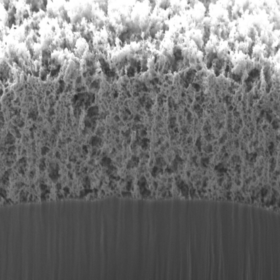
The Hydrogen Stream: Ionautics advances catalyst toward production
Sweden’s Ionautics has advanced its platinum-based hydrogen catalyst toward full-scale industrial production, while thyssenkrupp nucera has signed contracts for 300 MW of alkaline electrolysis capacity in Spain and 260 MW in India.
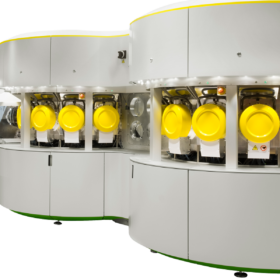
Midsummer secures second order for CIGS production line equipment
Swedish thin-film solar manufacturer Midsummer has secured its largest-ever order for production equipment, covering a complete solar cell factory. It follows an initial order in May 2025 for a 15 MW line producing thin-film copper, indium, gallium and selenide (CIGS) solar cells.
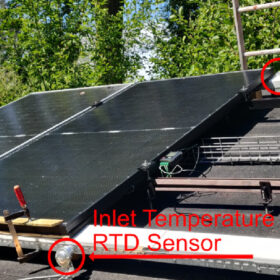
Air-based photovoltaic-thermal system can achieve significant energy savings in buildings
Researchers in Sweden have developed an air-based photovoltaic-thermal system that can preheat ventilation air and domestic hot water, cutting district heating demand by up to 16% for ventilation and 7% for hot water while also reducing peak heating loads in cold Nordic climates.

Alfa Laval to build South Korea’s first large-scale liquid air storage system
Swedish engineering company Alfa Laval and South Korea’s Institute for Advanced Engineering (IAE) plan to build a liquid air energy storage (LAES) facility designed to liquefy up to 10 tons of air per day for long-duration grid balancing.

New solar tracking strategies aim to maximize crop yield in agrivoltaics
Swedish researchers developed two novel single-axis solar tracking strategies that dynamically adjust panel tilt based on crop light requirements, balancing photosynthesis and energy production. One strategy prioritizes daily light integral targets before shifting to energy capture, while the other uses the light-response curve to optimize photosynthesis, offering improved dual-use efficiency compared with conventional tracking methods.

Optimal solar module row spacing for agrivoltaics across Europe
Researchers in Sweden developed a new methodology to optimize agrivoltaic systems across Europe, showing that row pitch, system type, and panel orientation must be tailored to local climate, crops, and regulatory constraints.

New surface texturing boosts TOPCon solar cell efficiency by 1%
Chinese researchers have demonstrated a single-step submicron structured surface texturing process that improved the absolute efficiency of a TOPCon solar cell by 1% through broadband anti-reflection and lower electrical resistance. The cell-level performance was validated in laboratory and outdoor tests.

Reducing PV module temperature with leaf vein–inspired fins
Researchers in Iraq have developed biomimetic leaf vein–inspired fins for photovoltaic panels, with reticulate (RET) venation reducing panel temperature by 33.6 C and boosting efficiency by 18% using passive cooling. Their study combines 3D CFD simulations and electrical evaluations to optimize fin geometry, offering a sustainable alternative to conventional cooling methods.
