New dopants may improve PV glass performance
According to a British-Swedish research team, the down‐shifting process for solar glass manufacturing can be improved through the use of two dopant cations that produce no absorption bands. The doping with these compounds is said to reduce the UV transmission while also keeping the glass free from absorption in the visible and near-infrared ranges.
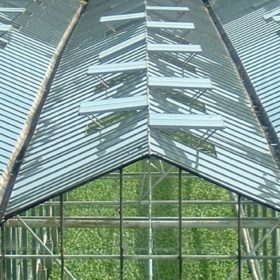
Photovoltaic blinds to improve greenhouse energy performance
A Swedish-Iranian research team modeled 14 photovoltaic blind configurations in checkerboard arrays 1m above a greenhouse roof emulated with EnergyPlus building energy simulation software. The group found a PV installation would reduce natural gas consumption, electricity demand and carbon emissions.
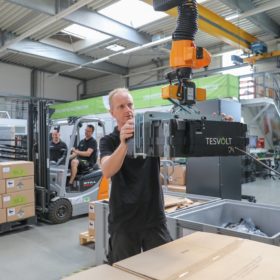
Battery manufacturing capacity set to increase fourfold to 1.3 TWh by 2030
Analysts at Wood Mackenzie have looked at plans for the incoming decade and concluded that about 119 manufacturing sites will be up and running by 2030. China currently sits firmly in the driving seat, with Asia Pacific comprising 80% of global manufacturing capacity, but Europe is catching up.

Northvolt secures $1.6bn backing for twin battery gigafactories
In a little over ten years, Northvolt aims to pour 150 GWh of batteries onto the European market, annually. The company is also working to source end-of-life batteries for half its raw materials.
Two strategic Euro solar deals rumored
State-owned power company China Three Gorges is reportedly ready to offer up to €600 million for 13 solar assets owned by X-Elio in Spain while Germany’s ib vogt is up for sale, according to Reuters.
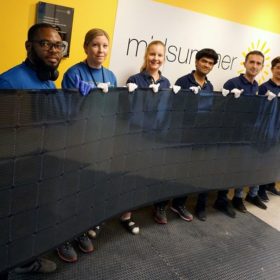
Midsummer unveils 500 W rooftop panel
The Swedish PV equipment supplier has launched Midsummer Magnum, a solar module for large rooftops. The manufacturer says the panel offers 14.54% efficiency and an output of 128.3 W per square meter. The company also unveiled a manufacturing process it claims can increase module output 10%.
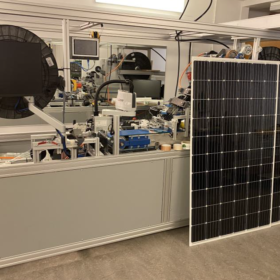
Sticking together
A cell interconnection method developed by a Swedish company promises lower-cost and higher-throughput production of PERC and more advanced silicon PV modules. The process is ready to move to pilot production, and its creators want to play a role in the anticipated European solar manufacturing renaissance.

Covid-19 weekly round-up: Ups and downs from the US residential market and one Swedish city tries to attract Europe’s best and brightest
Industry body SolarPower Europe is trying to stay bullish about the lingering effects as the continent starts to come out of lockdown and one analyst has predicted a healthy large scale solar market will carry the US through the crisis.

A long way to go for iron pyrite solar cells
A paper from Sweden has attempted to uncover why the conversion efficiency of solar cells based on cheap, abundant iron pyrites continues to languish below 3% despite the apparent optoelectronic promise of the material.

Sweden closes rebate scheme for rooftop PV
The government said developers have one more month to apply for the subsidy. It also delayed the project-completion deadline from Dec. 31, 2020, to June 30, 2021. From next year, rooftop PV will likely be supported by unspecified tax breaks.
