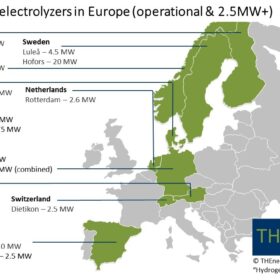
The Hydrogen Stream: Europe prioritizes PEM electrolysis
Several companies have announced new hydrogen deals in Europe, as Germany moves forward on hydrogen collaboration with Australia and the United Arab Emirates. pv magazine also spoke with Thomas Hillig, managing director of THEnergy, about Europe’s electrolysis capacity.
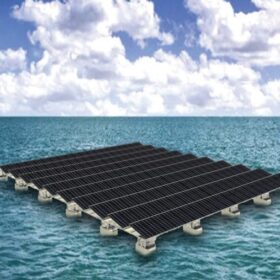
UAE startup unveils floating structure for offshore PV
Dubai-based Floating Man is currently negotiating contracts for the deployment of a novel floating structure for offshore solar. A 900 m2 system built with the floaters could support up to 200 solar panels.

Researchers apply thresholding to PV soiling image analysis
Thresholding methods have commonly been used to characterize the soiling accumulated on glass coupons. Researchers led by the Sapienza University of Rome have identified 16 automatic thresholding methods that may be used for analyzing soiling on PV panels.
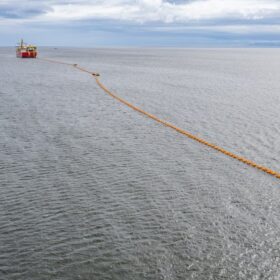
TAQA mulls shareholder status in 900 km Greece-Cyprus interconnector
TAQA, an Abu Dhabi-based energy company, has signed a memorandum of understanding to explore the possibility of becoming a shareholder in the €1.9 billion ($3.08 billion) Greece and Cyprus high-voltage direct current (HVDC) electricity interconnection.
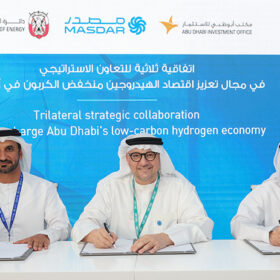
The Hydrogen Stream: Masdar signs more hydrogen deals at COP28
Masdar unveiled a 10 GW Africa Growth Plan for renewable investments in six Sub-Saharan Nations at COP28 in Dubai this week, in addition to signing four additional hydrogen deals.
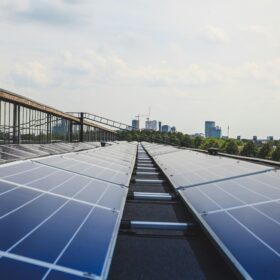
Day-ahead forecasting for commercial PV with battery storage
A research group in South Africa has developed a novel method for PV output forecasting in commercial buildings. The proposed approach is purportedly able to accurately forecast the output power of a PV plant using real-time weather data.

The Hydrogen Stream: Brazil reveals $3.6 billion hydrogen production plan
Brazil has announced a $3.6 billion hydrogen production plan, Adnoc has launched a green hydrogen refueling-station pilot in the United Arab Emirates, and the European Union has moved forward on the establishment of EU-wide hydrogen rules.
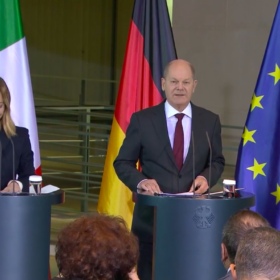
The Hydrogen Stream: Germany, Italy plan hydrogen pipeline to North Africa
Germany, in collaboration with Italy, has revealed plans to import hydrogen from Northern Africa.
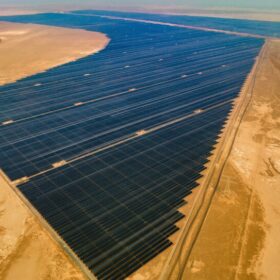
EWEC commissions 2 GW solar plant in Abu Dhabi
Abu Dhabi government officials last week inaugurated the 2 GW Dhafra Solar Photovoltaic Independent Power Project, located roughly 35 kilometers from United Arab Emirates’ capital. The plant consists of four million bifacial solar panels and is claimed to be the world’s largest single-site solar power plant.
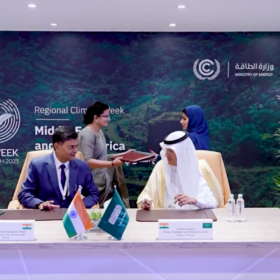
The Hydrogen Stream: India, Saudi Arabia sign hydrogen agreement
India and Saudi Arabia have agreed to develop electrical interconnections and low-carbon hydrogen, while Masdar has partnered with Boeing ion the sustainable aviation fuel (SAF) industry.
